
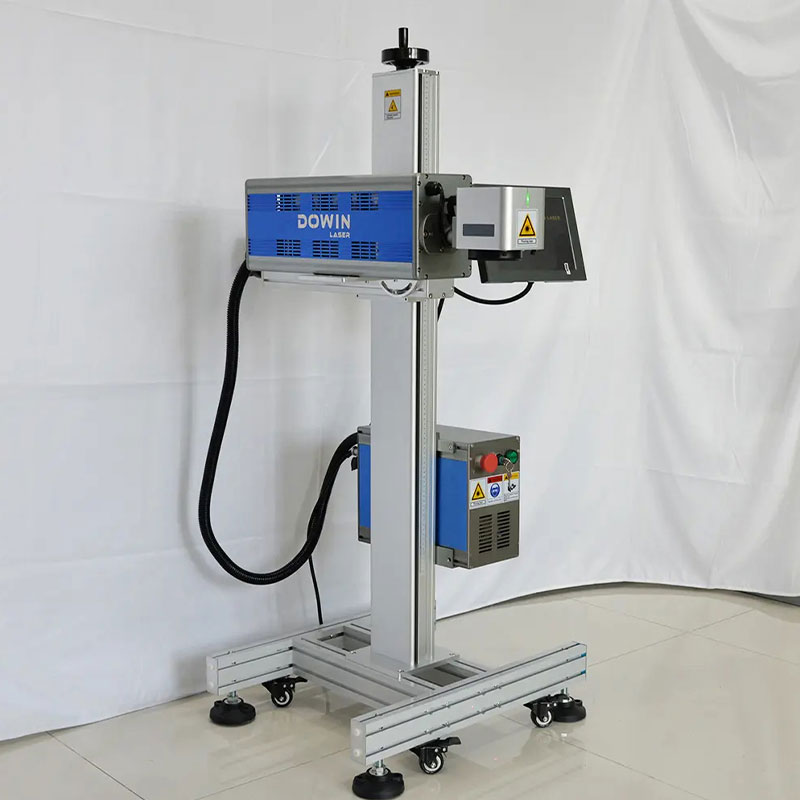
Flying CO₂ Laser Marking Machine — High-Speed On-The-Fly Marking Solution
Typical Applications
This flying CO₂ laser marking machine is suited for applications in industries including:
Paper Goods & Promotional Items — Logos, serial numbers, and quality marks.
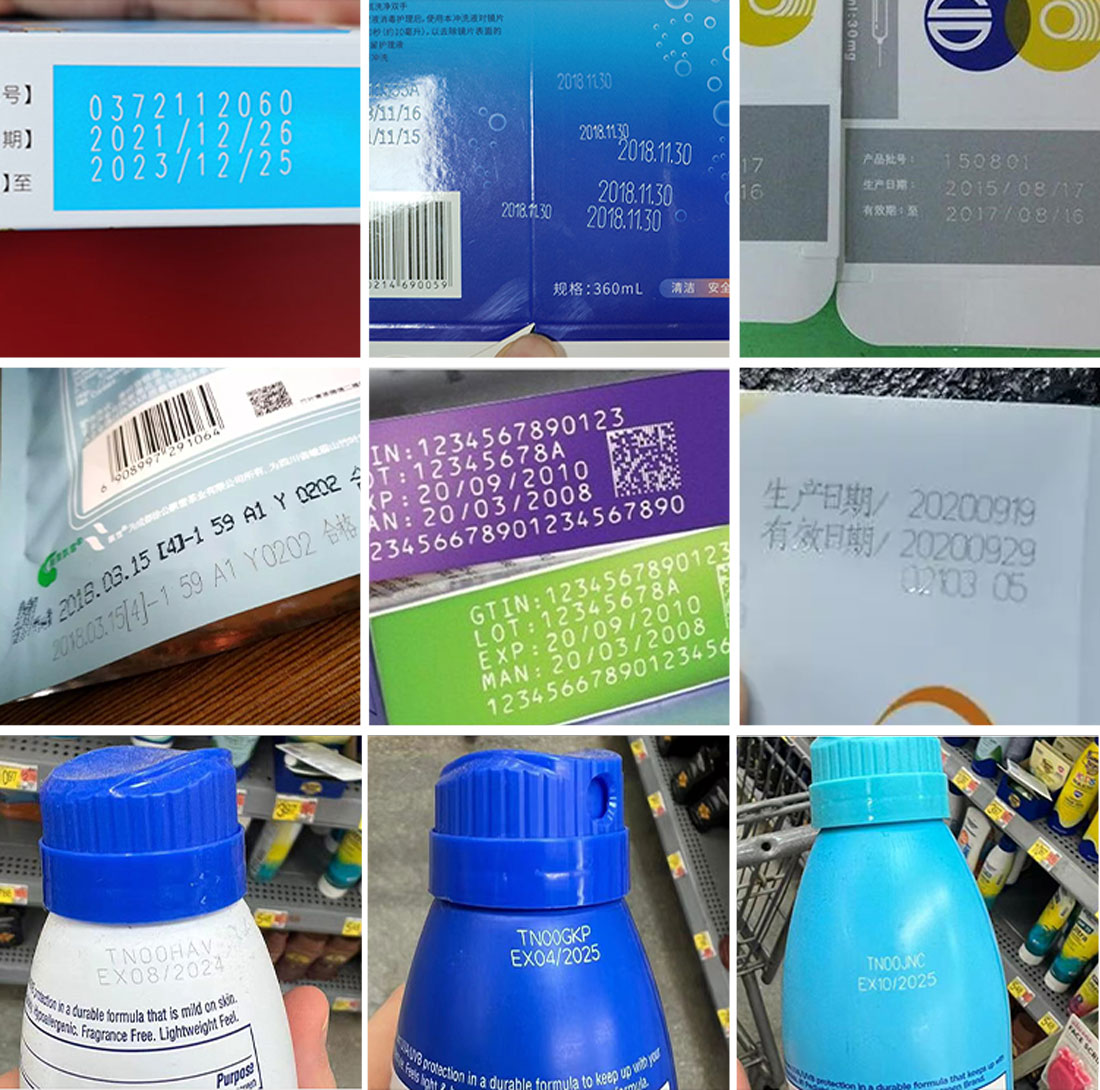
Packaging — Expiry dates, batch codes, barcodes on boxes, cartons, film, tubes.
Textile & Leather — Marking garments, labels, and accessories.
Woodworking & Crafts — Engraving designs and production codes on wood products.
Plastic & PVC Manufacturing — Marking components, tubes, and molded parts.
Product Highlights
On‑The‑Fly Industrial CO₂ Laser Marker for Assembly Line is a high-efficiency CO₂ laser marking system designed for continuous, on-the-fly engraving and coding on fast moving products. Ideal for industrial production lines, packaging operations, and automated workflows, this machine delivers precise, permanent markings on a wide range of non-metallic materials with minimal maintenance and no consumables.
What Is a Flying CO₂ Laser Marking Machine?
A flying CO₂ laser marking machine integrates a high-speed laser and scanning system capable of marking products as they move on a conveyor or production line. Unlike stationary markers, it performs dynamic marking without stopping the product, boosting output and eliminating bottlenecks for high-volume manufacturing.
Core Features & Capabilities
✔ High-Speed Automatic Marking
Designed for integration with assembly lines, this machine marks products in motion with speeds optimized for modern production throughput.
✔ Exceptional Precision and Detail
Fine laser focus and repeat accuracy ensure clean, sharp text, serial numbers, barcodes, QR codes, dates, logos, and graphic marks — even on curved or irregular surfaces.
✔ Versatile Material Compatibility
Works with a broad spectrum of non-metal materials, including wood, leather, plastics, acrylics, paper, textiles, PVC, MDF, marble, and more.
✔ Durable, Permanent Marking
CO₂ laser marking creates deep, abrasion-resistant codes and graphics that withstand handling, environmental exposure, and time — crucial for traceability and compliance.
✔ Non-Contact Operation
The non-contact laser process avoids material deformation or damage, reduces wear and tear on the machine, and eliminates the need for ink, ribbons, or physical contact.
✔ Easy Integration & Control
Equipped with intuitive software and touch control, the machine supports standard file formats and automatic data management for serial/batch coding, reducing manual setup.
Technical Specifications (Typical)
| Specification | Details |
|---|---|
| Laser Type | CO₂ Laser |
| Marking Mode | Flying / On-The-Fly marking |
| Marking Speed | High (designed for production line use) |
| Marking Area | From ~110 × 110 mm (expandable depending on configuration) |
| Applicable Materials | Wood, Fabric, Plastic, Paper, Leather, Acrylic, PVC, MDF, Marble and other organics |
| Positioning | Integrated positioning system (red dot/CCD supported) |
| Cooling | Air cooling / water cooling options |
| Power Supply | Standard AC220 V / 50 Hz or 110 V / 60 Hz support |
Benefits for Manufacturers
Increase Production Efficiency
On-the-fly marking eliminates the need to halt products for printing, significantly improving output rates and making this solution ideal for high-volume production lines that require constant marking without delays.
Cost-Effective & Low Maintenance
With no consumables and minimal moving parts, flying CO₂ laser systems reduce operating costs and downtime. CO₂ tubes have long service life, often exceeding 20,000–60,000 hours.
Flexible Automation Support
Supports automatic generation and printing of serial numbers, batch codes, dates, barcodes and QR codes with little to no intervention — improving traceability and reducing human errors.
Reliable Quality & Consistency
Precision optics and galvanometer scanning produce consistent mark quality even at high speed, meeting industrial traceability, branding, and anti-counterfeiting requirements.
Why Choose Flying CO₂ Laser Marking?
Modern industrial producers require speed, reliability, and precision — and this flying laser marking technology delivers all three. Its non-contact operation preserves material integrity, while integration with automated workflows enhances efficiency and traceability, making it a strategic investment for brands and manufacturers focused on quality and output.
Included & Optional Accessories
Included
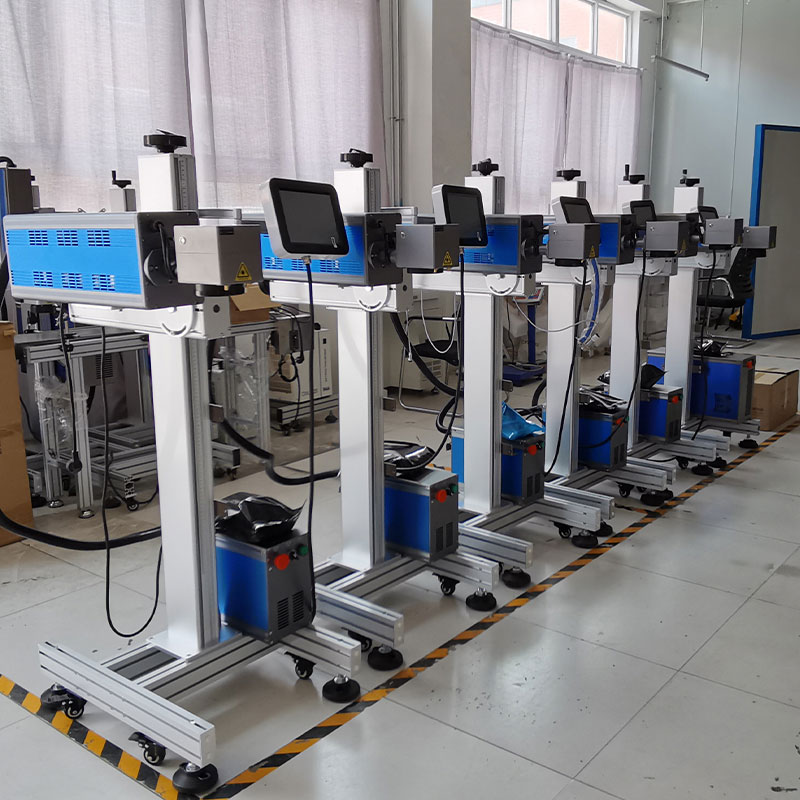
- Fully configured flying CO₂ laser marking system
- Control software and interface cables
- Safety and alignment accessories
Optional
Customized marking heads and lenses
Conveyor integration kits
CCD vision or automatic positioning modules
Water cooling modules for extended duty cycles
Laser Marking Technology Comparison
Laser marking systems differ mainly by wavelength, interaction with materials, speed, precision, and suitable applications. The three most widely used types are:
- Fiber Laser Marking
- CO₂ (Carbon Dioxide) Laser Marking
- UV (Ultraviolet) Laser Marking
Wavelength & Physical Characteristics
| Technology | Typical Wavelength | Beam Type | Heat Effect |
|---|---|---|---|
| Fiber Laser | ~1064 nm (infrared) | Solid-state fiber | Moderate thermal |
| CO₂ Laser | ~10,600 nm (far infrared) | Gas laser | Higher thermal |
| UV Laser | ~355 nm (ultraviolet) | Solid state, frequency tripled | Minimal “cold” marking |
- Fiber lasers use intense infrared focused through optical fiber for powerful surface interactions.
- CO₂ lasers rely on gas plasma and produce heat to vaporize or carbonize material surfaces.
- UV lasers produce a short, high-energy wavelength that acts through photochemical effects with very little thermal impact.
Get Started
This flying CO₂ laser marking solution offers a future-proof way to bring high-speed, durable, and automated product marking into your production line. Contact us to customize the marking area, power level, and system components to fit your specific workflow.