
Home › Forums › Laser Marking Forum › 2026 Featured: Aluminum Alloy Handheld Laser Marker
- This topic has 1 reply, 1 voice, and was last updated 3 days, 1 hour ago by
Dwmin.
-
AuthorPosts
-
02/24/2026 at 1:40 AM #691
Dwmin
KeymasterIn modern manufacturing, permanence is power. As global production becomes more data-driven and compliance-focused, the demand for durable, traceable, and high-precision marking continues to surge. From stainless steel components to coated metal panels and hard plastics, industries now require identification solutions that are fast, flexible, and uncompromising.
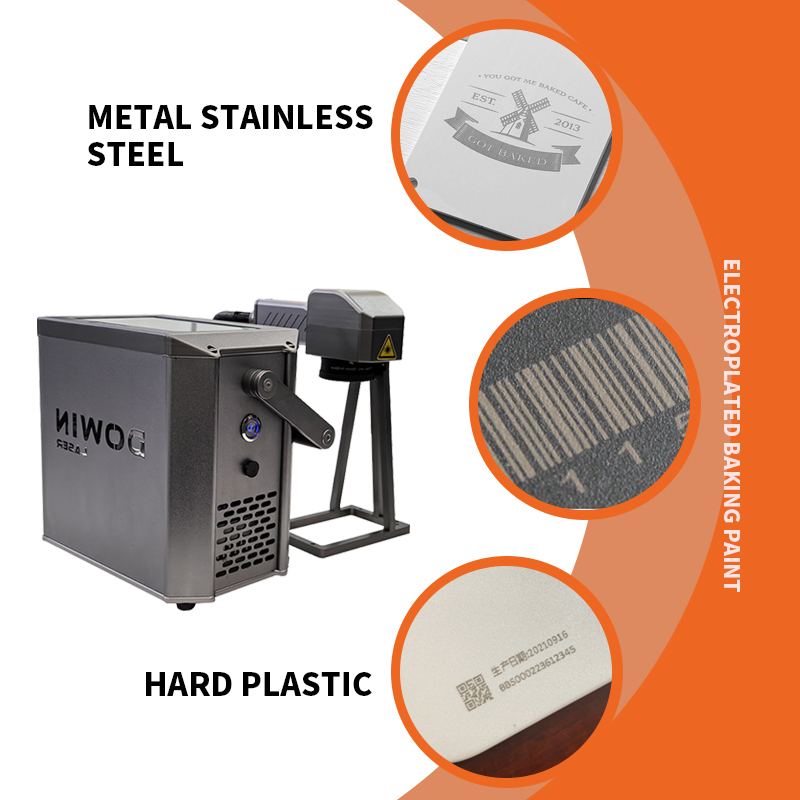
The handheld laser marking machine shown above represents a decisive step forward — combining mobility, industrial durability, and multi-material capability into a compact aluminum alloy body built for real-world production.
Contact Us
Why Portable Laser Marking Is Reshaping Industry
Global laser marking adoption has accelerated over the past decade, driven by three macro forces:
-
Traceability Regulations – Automotive, aerospace, and medical industries now require permanent serial numbers, QR codes, and compliance marks that cannot fade or peel.
-
Automation & Smart Manufacturing – Production lines increasingly integrate digital marking systems connected to MES and ERP platforms.
-
Consumable-Free Operations – Companies are phasing out ink-based systems to reduce downtime, waste, and environmental impact.
Portable systems are the next logical evolution. Not every component can be moved to a fixed workstation. Large assemblies, heavy equipment parts, and on-site fabrication demand flexibility.
Mobility is no longer a luxury — it is a competitive advantage.
Built for Industrial Reality
This aluminum alloy housing provides structural strength while maintaining portability. The compact footprint allows operators to bring the marking head directly to the workpiece rather than redesigning workflows around stationary equipment.
The system demonstrates high-quality results across:
-
Stainless Steel – Crisp serial numbers, logos, and data matrices with strong contrast.
-
Electroplated or Coated Surfaces – Precise removal or surface modification without excessive heat damage.
-
Hard Plastics – Clean, permanent codes without ink, solvents, or adhesion issues.
Unlike traditional marking methods, laser technology modifies the material itself. There are no consumables, no smudging, and no secondary curing process.
Breaking the “Power Equals Performance” Myth
A common industry misconception is that higher wattage automatically guarantees better results. In reality, marking quality depends more on beam control, pulse stability, and wavelength compatibility with the material.
A well-engineered portable laser can outperform bulkier high-power systems when properly optimized. For stainless steel, controlled oxidation creates sharp contrast. For plastics, precision pulse management prevents melting or discoloration. For coated metals, energy must be balanced to avoid substrate damage.
Smart energy beats brute force.
The Economics Behind the Shift
From a cost perspective, handheld laser marking machines challenge traditional accounting assumptions.
While the initial investment may exceed that of entry-level ink systems, long-term operational savings are substantial:
-
No ink or solvent purchases
-
Reduced maintenance downtime
-
Minimal consumable replacement
-
Lower environmental compliance costs
-
Improved production flexibility
In mid-volume manufacturing environments, return on investment can often be achieved within 12–24 months.
More importantly, the cost of marking failure — misreads, faded codes, rejected parts — is far higher than the cost of reliable laser performance.
Multi-Material Capability: A Strategic Asset
Manufacturers today rarely work with a single substrate. A typical production floor may handle:
-
Stainless steel brackets
-
Powder-coated panels
-
Plastic housings
-
Electroplated components
A portable laser system that adapts across these materials reduces equipment redundancy and simplifies training.
Versatility is not just technical convenience — it is operational efficiency.
A Personal Perspective: Mobility Is the Future
The industry’s historical mindset has centered on large, fixed marking stations. But manufacturing is becoming more modular, decentralized, and adaptive. Portable marking aligns with this transformation.
Instead of moving heavy parts across the factory, bring the precision to the product.
This shift reduces material handling risks, shortens cycle times, and increases production agility. In a competitive market where responsiveness defines success, agility matters.
Conclusion
Laser marking is no longer a niche upgrade. It is becoming the standard for durable, compliant, and data-driven identification.
A compact, aluminum alloy handheld laser marking machine bridges the gap between industrial performance and operational flexibility. It handles stainless steel, coated metals, and hard plastics with precision — while freeing manufacturers from the constraints of fixed systems and consumable-dependent workflows.
Permanent marks. Portable power. Smarter production.
02/24/2026 at 2:11 AM #697KeymasterFrom a user’s perspective, the biggest advantage is flexibility on the production floor. Previously, large or irregular parts had to be transported to a fixed marking station, which increased handling time and the risk of surface damage. With a handheld laser system, the marking head goes directly to the component — whether it’s a stainless steel frame, a coated panel, or a plastic housing already assembled into a larger structure. This shift alone reduces workflow bottlenecks and improves overall efficiency. In practical terms, it means fewer delays, less coordination between departments, and faster turnaround for urgent orders.
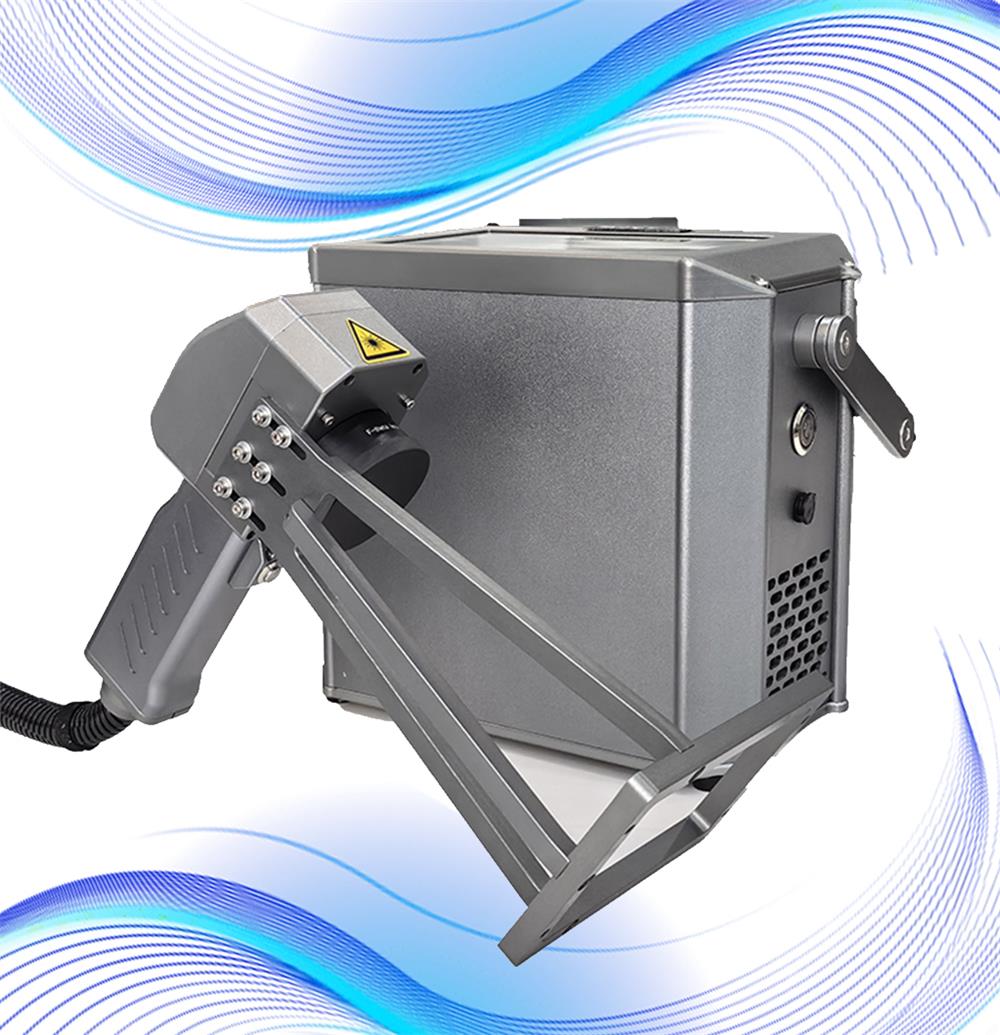
Another key experience as an operator is the consistency of results. Once parameters are optimized for specific materials, the system delivers repeatable contrast and precision without the variability associated with ink-based processes. There are no clogged nozzles, no drying time, and no fading marks weeks later. For businesses concerned about traceability, audits, and long-term durability, this reliability builds confidence. Over time, that confidence translates into reduced rework, fewer rejected parts, and a more predictable production rhythm — which, ultimately, is what every manufacturer strives for. -
-
AuthorPosts
- You must be logged in to reply to this topic.