
Home › Forums › Laser Marking Forum › Laser Marking in Food Packaging
Tagged: Food Packaging
- This topic is empty.
Viewing 1 post (of 1 total)
-
AuthorPosts
-
02/25/2026 at 1:23 AM #714
Dwmin
KeymasterRevolutionizing Food Packaging: The Power of Laser Marking
Introduction
In the fast-paced and highly competitive food and beverage industry, ensuring product authenticity, traceability, and compliance is of utmost importance. Counterfeit food products, adulteration, and mislabeling pose significant risks to consumer health, brand reputation, and the economy. To combat these challenges, manufacturers are increasingly turning to advanced technologies such as laser marking for food packaging. Laser marking offers numerous benefits over traditional labeling methods, including permanent results, high precision, and enhanced security. In this article, we will explore the world of laser marking for food packaging, discussing its advantages, applications, and future trends.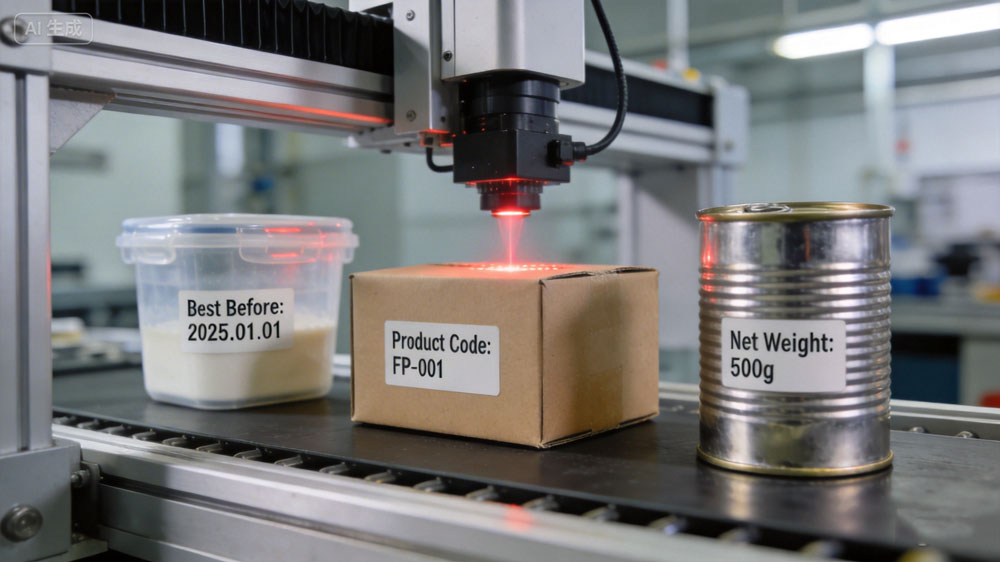
The Rising Threat of Food Counterfeiting
Food counterfeiting is a global issue that affects various sectors of the food and beverage industry. According to recent reports, cases of food fraud have risen tenfold in the past four years, costing the global economy around $40 billion every year. Fraudulent practices such as product adulteration, mislabeling, and fake branding not only cause financial losses but also pose serious health risks to consumers. Common targets of food counterfeiting include olive oil, honey, tea, coffee, beer, wine, spirits, fish, seafood, meat, spices, and cocoa. However, the types of products affected by food fraud are constantly evolving, with nuts, nut products, seeds, eggs, dairy, and fish and seafood expected to see significant increases in fraudulent activity in 2025.The Benefits of Laser Marking for Food Packaging
1. Permanent and Tamper-Proof Marks
One of the most significant advantages of laser marking for food packaging is its ability to create permanent and tamper-proof marks. Unlike traditional labels that can be easily removed, altered, or counterfeited, laser marks are engraved directly onto the packaging material, ensuring that they remain legible and intact throughout the product’s lifecycle. This makes it much more difficult for counterfeiters to replicate or tamper with the packaging, providing consumers with greater confidence in the authenticity and safety of the food they purchase.2. High Precision and Versatility
Laser marking systems offer high precision and versatility, allowing manufacturers to create detailed and complex marks on a wide range of packaging materials, including plastics, glass, paper, and metal. The laser beam can be precisely controlled to produce marks of different sizes, shapes, and depths, enabling manufacturers to meet the specific labeling requirements of different products and markets. Additionally, laser marking can be used to create various types of marks, such as barcodes, QR codes, serial numbers, logos, and nutritional information, providing manufacturers with a comprehensive labeling solution.3. Enhanced Security and Traceability
Laser marking can be integrated with advanced security technologies such as serialization, encryption, and track-and-trace systems to enhance the security and traceability of food products. By assigning a unique identifier to each product, manufacturers can track its movement throughout the supply chain, from production to distribution, ensuring that it is not tampered with or counterfeited. This also enables consumers to verify the authenticity of the product by scanning the mark with a smartphone or other device, providing them with greater transparency and trust in the food they consume.4. Cost-Effective and Environmentally Friendly
Laser marking is a cost-effective and environmentally friendly labeling solution. Unlike traditional labeling methods that require the use of consumables such as ink, toner, and labels, laser marking uses a laser beam to create marks directly onto the packaging material, eliminating the need for these consumables. This not only reduces the cost of labeling but also minimizes the environmental impact of the packaging process, as there is no waste generated from the use of consumables. Additionally, laser marking systems have a long lifespan and require minimal maintenance, further reducing the overall cost of ownership.Applications of Laser Marking in the Food and Beverage Industry
1. Date and Batch Coding
Date and batch coding is one of the most common applications of laser marking in the food and beverage industry. Laser marking systems can be used to print expiration dates, batch numbers, and other important information on food packaging, ensuring that consumers are aware of the product’s freshness and origin. This also helps manufacturers to comply with regulatory requirements regarding food labeling and traceability.2. Branding and Logos
Laser marking can be used to create high-quality and permanent logos and branding on food packaging, enhancing the brand’s visibility and recognition. This helps to differentiate the product from competitors and build brand loyalty among consumers. Additionally, laser marking can be used to create custom designs and patterns on the packaging, adding a unique and attractive touch to the product.3. Anti-Counterfeiting Measures
Laser marking can be used to implement anti-counterfeiting measures such as holograms, microtext, and hidden codes on food packaging, making it more difficult for counterfeiters to replicate the product. These security features can be easily verified by consumers using a smartphone or other device, providing them with greater confidence in the authenticity of the product.4. Traceability and Supply Chain Management
Laser marking can be integrated with track-and-trace systems to provide real-time visibility into the movement of food products throughout the supply chain. This enables manufacturers to monitor the product’s location, temperature, and other important parameters, ensuring that it is stored and transported under the appropriate conditions. This also helps to reduce the risk of foodborne illness and ensure the safety of the product for consumers.Future Trends in Laser Marking for Food Packaging
1. Integration with IoT and AI
The integration of laser marking systems with the Internet of Things (IoT) and artificial intelligence (AI) is expected to revolutionize the food and beverage industry. IoT-enabled laser marking systems can collect and transmit data about the product’s origin, processing, and distribution, providing manufacturers with real-time insights into the supply chain. AI algorithms can be used to analyze this data to detect anomalies, predict demand, and optimize production processes, improving the efficiency and quality of the food packaging process.2. Advancements in Laser Technology
Advancements in laser technology are expected to lead to the development of more powerful, efficient, and versatile laser marking systems. For example, fiber lasers are becoming increasingly popular due to their high power, speed, and reliability, making them suitable for a wide range of applications in the food and beverage industry. Additionally, new laser wavelengths and marking techniques are being developed to enable the marking of new materials and create more complex and detailed marks.3. Focus on Sustainability
Sustainability is becoming an increasingly important consideration in the food and beverage industry, and laser marking is well-positioned to meet this demand. Laser marking systems use less energy and produce less waste than traditional labeling methods, making them a more environmentally friendly option. Additionally, laser marking can be used to create marks on biodegradable and compostable packaging materials, further reducing the environmental impact of the packaging process.4. Increased Adoption in Emerging Markets
The adoption of laser marking for food packaging is expected to increase in emerging markets such as Asia, Africa, and Latin America. These regions are experiencing rapid growth in the food and beverage industry, and manufacturers are increasingly looking for advanced technologies to improve the quality and safety of their products. Additionally, the implementation of stricter regulatory requirements regarding food labeling and traceability is driving the adoption of laser marking systems in these regions.Conclusion
Laser marking is a powerful and versatile technology that is transforming the food and beverage industry. Its ability to create permanent, high-precision, and tamper-proof marks on food packaging offers numerous benefits over traditional labeling methods, including enhanced security, traceability, and compliance. As the threat of food counterfeiting and adulteration continues to grow, the adoption of laser marking for food packaging is expected to increase in the coming years. With advancements in laser technology, integration with IoT and AI, and a focus on sustainability, laser marking is poised to play an even more important role in ensuring the safety, authenticity, and quality of food products in the future. -
AuthorPosts
Viewing 1 post (of 1 total)
- You must be logged in to reply to this topic.