
Home › Forums › Laser Marking Forum › The Art and Science of Industrial Lasers
Tagged: Industrial Lasers
- This topic is empty.
-
AuthorPosts
-
02/26/2026 at 1:38 AM #740
Dwmin
KeymasterWhen you think of the word laser, many things may come to mind. A former teacher who used a laser to point at the board, a cat chasing a laser, laser hair removal, or perhaps even laser surgery. All these applications are examples of commercial lasers, but many people do not consider another category of lasers that lead manufacturing processes behind the scenes—industrial lasers.
Industrial lasers are the unsung heroes of modern manufacturing, powering everything from small one-off product markings on consumer products to large production batches of precise, efficient, and permanent processing. In this article, we will explore the world of industrial lasers, discussing their types, working principles, applications, and future trends.
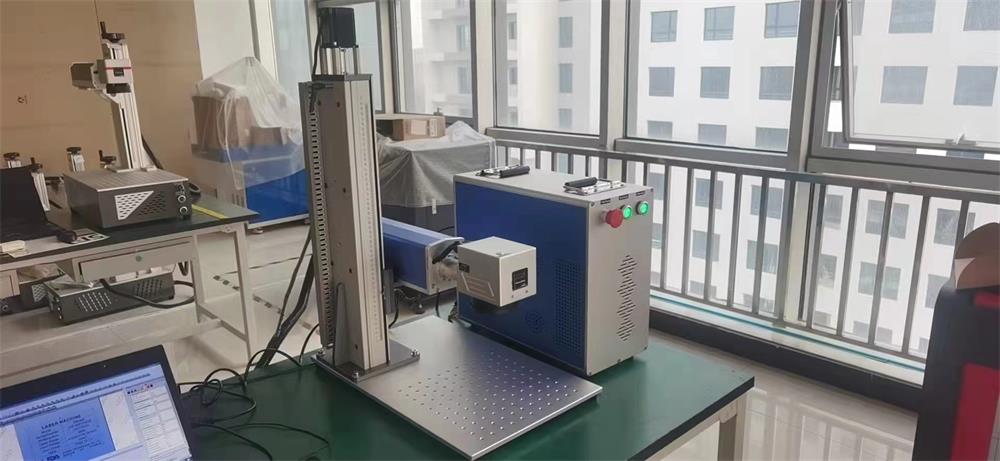
Types of Industrial Lasers
There are three main types of industrial lasers, each with different wavelengths and oscillators that generate their beams. Because of this, they all have processing and material specialties.
Fiber Lasers
Fiber lasers use an optical fibre resonator for amplifying the laser beam. The optical fibre creates a high speed and high output, generally around a 1090 nm wavelength. Fiber lasers are known for their high efficiency, reliability, and compact size, making them ideal for a wide range of industrial applications, including cutting, welding, and marking.
According to a recent market report, fiber lasers now represent over 40% of new industrial laser installations due to energy efficiency levels exceeding 30% and operational lifespans surpassing 100,000 hours. This dominance is expected to continue as the technology continues to improve and costs decrease.
UV Lasers
UV laser beams are created by passing a 1064 nm laser beam through two crystals for a final 355 nm wavelength. The 355 nm wavelength has incredibly high absorption levels, so it conducts the photolytic degradation process on materials. This process breaks bonds down directly instead of altering the surface area. Breaking down bonds prevents heat transfer, so the UV laser marking process is called “cold marking.”
UV lasers are ideal for marking delicate materials such as glass, plastics, and electronics, as they produce high-contrast marks without damaging the surface. They are also commonly used in medical device manufacturing for marking implants and surgical tools.
CO₂ Lasers
CO₂ lasers use a mixture of carbon dioxide, nitrogen, and helium as the laser medium. They operate at a wavelength of 10.6 µm, which is well-absorbed by non-metallic materials such as wood, plastic, and paper. CO₂ lasers are known for their high power output and ability to cut thick materials, making them popular in industries such as packaging, textiles, and signage.
While CO₂ lasers are less efficient than fiber lasers, they remain a cost-effective option for many industrial applications. They are also relatively easy to maintain, with a long lifespan and low operating costs.
How Industrial Lasers Work
Industrial lasers work by generating a high-intensity beam of light that is focused onto a material surface. The energy from the laser beam is absorbed by the material, causing it to melt, vaporize, or change color. This process can be used for cutting, welding, marking, engraving, and other material processing applications.
Industrial lasers are typically placed next to the production line and above the target. The product moves down the line, and the industrial laser machine marks, cuts, or welds while the production line is moved. They perform just as well off the line in manual operations where products are presented to the laser by operators, robots, etc.
Industrial Laser Marking
Laser marking is one of the main uses for industrial lasers and is used in a variety of ways. It involves using a laser beam to create permanent marks on a material surface without damaging the underlying material. Laser marking can be used to create serial numbers, barcodes, logos, and other types of markings on a wide range of materials, including metals, plastics, and glass.
There are several different types of laser marking techniques, including:
- Black Annealing: This technique involves heating the material surface with a laser beam to create a black mark. A laser beam shoots onto the surface area of a material with carbon properties. The heating activates the carbon properties, and the properties migrate to the surface as a black mark. This process is typical in the aerospace and medical industries for this reason.
- Industrial Laser Engraving: Industrial engraving is an industrial laser marking method that utilises evaporation to produce an indented mark. The industrial laser machine shoots a laser onto the target, heats it to the evaporation point, and removes layer(s) of the material in order to create depth. Industrial engraving is popular for traceability marks, identification marks, and decorative pieces like jewelry. Depending on the material and industrial laser machine, the engraving ranges in depth. It is extremely common in the automotive industry for caste engine components.
- Industrial Laser Etching: Industrial etching is an industrial laser marking method that uses melting and malleability to remove a very thin layer of material and “rough up” the surface so that light is absorbed when viewing. This makes the mark appear as white to the eye. Etching can be used interchangeably with engraving in some industries, but not all. For example, medical implants do not allow etched marks because of the additional texture or raised marks that could collect dust.
Industrial Laser Cutting
Industrial laser cutting is a widely used process because of the clean cuts that hardly leave behind burrs. It works by focusing a laser light onto a target, amplifying it, and directing the beam across a cut line. The beam melts, burns, and then evaporates the material. Laser cutting can be used to cut a wide range of materials, including metals, plastics, wood, and composites.
Laser cutting machines are available in a variety of sizes and power levels, from small desktop models to large industrial systems. They can be programmed to cut complex shapes with high precision and accuracy, making them ideal for use in industries such as automotive, aerospace, and electronics.
Industrial Laser Welding
Industrial laser welding is a process that uses a laser beam to join two or more pieces of material together. The laser beam generates a high-intensity heat that melts the material at the joint, creating a strong bond. Laser welding is known for its high precision, speed, and ability to weld thin materials without distortion.
Laser welding is commonly used in industries such as automotive, aerospace, and medical device manufacturing for joining components with high precision and accuracy. It can also be used for welding dissimilar materials, such as copper and aluminum, which can be difficult to weld using traditional methods.
Advancements in Industrial Laser Technology
Industrial laser technology has skyrocketed with advancement since its creation in the 1960s. When lasers were first used, scientists didn’t even know what to do with them. Today, industrial laser technology continues to grow with new trends for industrial laser machines.
AI Integration
One of the most significant advancements in industrial laser technology is the integration of artificial intelligence (AI) and machine learning. AI can be used to optimize the laser cutting, welding, and marking processes, improving efficiency, accuracy, and quality.
For example, AI can be used to predict the optimal laser parameters for a given material and application, reducing the need for manual adjustment. It can also be used to monitor the laser process in real-time, detecting defects and making adjustments to ensure consistent quality.
Beam Shaping
Another important advancement in industrial laser technology is beam shaping. Beam shaping involves modifying the shape and intensity of the laser beam to optimize it for a specific application. This can be done using a variety of techniques, including diffractive optical elements, adaptive optics, and beam splitters.
Beam shaping can improve the quality of laser cuts, welds, and marks, reducing heat-affected zones and improving precision. It can also be used to create complex shapes and patterns, expanding the range of applications for industrial lasers.
High-Power Lasers
High-power lasers are another area of significant advancement in industrial laser technology. High-power lasers can generate beams with power levels of several kilowatts or more, making them ideal for cutting and welding thick materials.
Recent advancements in fiber laser technology have made it possible to produce high-power lasers with improved efficiency and reliability. These lasers are now commonly used in industries such as automotive, aerospace, and shipbuilding for cutting and welding thick metal plates.
Market Trends and Growth
Global Industrial Laser Market Statistics (2026)
- Market Size: USD 75.6 billion
- Projected CAGR (2026-2035): 17.41%
- Asia-Pacific Market Share: ~50%
- Europe Market Share: ~25%
- North America Market Share: ~20%
- Fiber Laser Market Share: >40% of new installations
- Ultrafast Laser Market Growth: 16.9% CAGR (2026-2033)
The global industrial laser market is expected to continue growing rapidly in the coming years, driven by advancements in technology, increasing demand for precision manufacturing, and the adoption of automation in industries such as automotive, aerospace, and electronics.
Key Market Drivers
- Precision Manufacturing: The demand for high-precision manufacturing solutions is driving the adoption of industrial lasers. Laser-based processes offer unmatched precision and accuracy, enabling manufacturers to produce complex components with tight tolerances.
- Automation: The integration of industrial lasers with automation systems is improving efficiency and reducing labor costs. Automated laser systems can perform tasks with high speed and accuracy, 24 hours a day, 7 days a week.
- Sustainability: Industrial lasers are more environmentally friendly than traditional manufacturing methods, as they produce less waste and consume less energy. This is driving their adoption in industries such as automotive and aerospace, where sustainability is a key priority.
- Technological Advancements: Ongoing advancements in laser technology, such as the development of high-power fiber lasers and ultrafast lasers, are expanding the range of applications for industrial lasers and improving their performance.
Regional Market Trends
The industrial laser market is dominated by the Asia-Pacific region, which accounts for approximately 50% of the global market share. This is due to the presence of large manufacturing industries in countries such as China, Japan, and South Korea, which are major consumers of industrial lasers.
Europe is the second-largest market for industrial lasers, accounting for approximately 25% of the global market share. The region is home to a number of leading laser manufacturers, including Trumpf and Coherent, and has a strong demand for industrial lasers in industries such as automotive, aerospace, and medical device manufacturing.
North America is the third-largest market for industrial lasers, accounting for approximately 20% of the global market share. The region has a strong demand for industrial lasers in industries such as aerospace, defense, and electronics, and is home to a number of leading laser manufacturers, including IPG Photonics and Coherent.
Personal Perspective: The Future of Industrial Lasers
As someone who has been working in the industrial laser industry for many years, I am excited about the future of this technology. Industrial lasers have already revolutionized many industries, and I believe they will continue to do so in the coming years.
One of the most exciting trends in industrial laser technology is the development of ultrafast lasers. These lasers can generate pulses of light with durations of just a few femtoseconds, which is shorter than the time it takes for electrons to move within an atom. This allows them to cut and weld materials with extreme precision, without causing any thermal damage.
Ultrafast lasers are already being used in industries such as semiconductor manufacturing and medical device production, and I believe their use will continue to grow in the coming years. They have the potential to revolutionize many industries, from aerospace to electronics, by enabling the production of smaller, lighter, and more complex components.
Another trend that I am excited about is the integration of industrial lasers with other technologies, such as 3D printing and robotics. This will enable manufacturers to create complex products with high precision and efficiency, reducing the need for manual labor and improving product quality.
Finally, I believe that industrial lasers will play an increasingly important role in sustainability efforts. As manufacturers look for ways to reduce their environmental impact, industrial lasers will offer a more efficient and environmentally friendly alternative to traditional manufacturing methods.
Conclusion
Industrial lasers are a powerful and versatile technology that is revolutionizing modern manufacturing. With their ability to cut, weld, and mark a wide range of materials with high precision and accuracy, they are enabling manufacturers to produce complex components with tight tolerances and high quality.
As technology continues to advance, industrial lasers will become even more powerful and versatile, opening up new possibilities for innovation and growth. Whether you are in the automotive, aerospace, or electronics industry, industrial lasers have the potential to transform your manufacturing processes and help you stay ahead of the competition.
The future of industrial lasers is bright, and I am excited to see what the next few years will bring. With ongoing advancements in technology and increasing demand for precision manufacturing, industrial lasers will continue to play a critical role in shaping the future of manufacturing.
-
AuthorPosts
- You must be logged in to reply to this topic.