
Home › Forums › Laser Marking Forum › The Power of Laser Direct Part Marking
Tagged: Direct Part Marking
- This topic is empty.
Viewing 1 post (of 1 total)
-
AuthorPosts
-
02/24/2026 at 9:02 PM #711
Dwmin
KeymasterRevolutionizing Manufacturing: The Power of Laser Direct Part Marking
Introduction
In the complex and fast-paced world of manufacturing, ensuring product traceability, quality control, and compliance is of utmost importance. Direct Part Marking (DPM) has emerged as a critical technology that allows manufacturers to create permanent, high-quality marks on the surfaces of parts and components. Among the various DPM methods available, laser marking systems have gained significant popularity due to their numerous advantages, including precision, durability, and versatility. In this article, we will explore the world of laser direct part marking, discussing its benefits, applications, challenges, and best practices.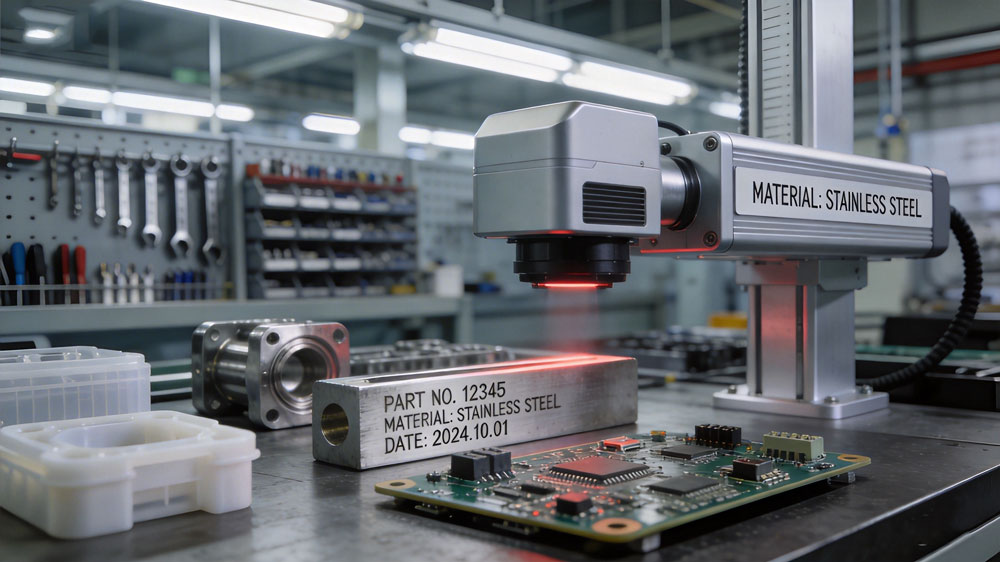
What is Direct Part Marking?
Direct Part Marking is the process of creating permanent markings on the surfaces of parts and components. These markings can include serial numbers, barcodes, QR codes, logos, and other identification information. DPM is essential for a wide range of industries, including automotive, aerospace, electronics, and medical devices, as it enables manufacturers to track products throughout their lifecycle, ensure compliance with regulatory requirements, and improve quality control.There are several methods of DPM, including laser marking, screen printing, ink stamping, engraving, and tagging. Each method has its own advantages and limitations, and the choice of method depends on factors such as the type of material, the required mark quality, and the production volume. Laser marking systems, however, are widely regarded as the most advanced and efficient DPM method available today.Advantages of Laser Systems for Direct Part Marking
1. Precision and Accuracy
Laser marking systems use a focused laser beam to create marks on the surface of materials. The laser beam can be precisely controlled to create high-quality, detailed marks with a resolution of up to 0.001mm. This ensures that the marks are clear, legible, and resistant to wear and tear. Additionally, laser marking systems can mark parts of various sizes and shapes, including small, complex components that are difficult to mark with other methods.2. Permanent Results
One of the most significant advantages of laser marking systems is their ability to create permanent marks. Unlike other DPM methods that may fade or wear off over time, laser marks are deeply engraved into the surface of the material, ensuring that they remain legible throughout the life of the part. This is particularly important for industries such as aerospace and medical devices, where product traceability and safety are critical.3. Versatility
Laser marking systems can mark a wide range of materials, including metals, plastics, glass, ceramics, and composites. This makes them suitable for use in various industries, from automotive to electronics. Additionally, laser marking systems can create different types of marks, including text, logos, barcodes, and 2D codes, providing manufacturers with the flexibility to meet their specific marking requirements.4. High Speed and Efficiency
Laser marking systems can mark parts at a high speed, with a marking rate of up to 10,000 characters per second. This significantly reduces the time required for DPM, allowing manufacturers to increase production output and meet tight deadlines. Additionally, laser marking systems can be integrated into existing production lines, enabling seamless and automated marking processes.5. Cost-Effective
While the initial investment in a laser marking system may be higher than other DPM methods, laser marking systems offer significant cost savings in the long run. Laser marking systems have no consumables, such as ink or toner, and require minimal maintenance, reducing operating costs. Additionally, the high speed and efficiency of laser marking systems can lead to increased productivity and reduced labor costs.Challenges in Direct Part Marking and How to Overcome Them
1. Material Compatibility
One of the main challenges in direct part marking is ensuring that the marking method is compatible with the material being marked. Some materials may reflect the laser beam or absorb too much heat, causing damage or illegible marks. To overcome this challenge, it is important to select the right laser marking system and adjust the laser settings, such as wavelength and power, to suit the specific material. Additionally, pre-treatment processes, such as surface cleaning or coating, may be required to improve the laser compatibility of some materials.2. Integration into Existing Production Lines
Integrating laser marking systems into existing production lines can be a complex and challenging process. It requires careful planning and coordination to ensure that the laser marking system is compatible with the existing equipment and software. To overcome this challenge, it is important to work with a reputable supplier who can provide comprehensive support and assistance during the integration process. Additionally, it may be necessary to modify the production line or invest in additional equipment to ensure seamless integration.3. Cost of Equipment
The cost of laser marking systems can be a significant barrier for some manufacturers, especially small and medium-sized enterprises. However, it is important to consider the long-term benefits and cost savings that laser marking systems can provide. Laser marking systems are a cost-effective solution in the long run, as they require minimal maintenance and have no consumables. Additionally, the high speed and efficiency of laser marking systems can lead to increased productivity and reduced labor costs.Applications of Direct Part Marking Across Industries
1. Automotive Industry
In the automotive industry, direct part marking is used to mark serial numbers, barcodes, and logos on various components, such as engine parts, transmission parts, and body panels. Laser marking systems are preferred in this industry due to their ability to create permanent, high-quality marks on metal and plastic components. Additionally, laser marking systems can be integrated into automated production lines, enabling efficient and consistent marking processes.2. Aerospace Industry
The aerospace industry requires high-quality, reliable DPM to ensure the safety and traceability of aircraft components. Laser marking systems are widely used in this industry to mark part numbers, serial numbers, and other identification information on components such as turbine blades, landing gear, and fuselage parts. Laser marks are permanent and resistant to harsh environmental conditions, making them ideal for use in the aerospace industry.3. Electronics Industry
In the electronics industry, direct part marking is used to mark serial numbers, barcodes, and logos on small, complex components such as printed circuit boards, connectors, and semiconductors. Laser marking systems are preferred in this industry due to their ability to create high-precision marks on delicate materials. Additionally, laser marking systems can be used to create 2D codes, which can store large amounts of data and are easily readable by scanners.4. Medical Device Industry
The medical device industry requires strict compliance with regulatory requirements regarding product traceability and safety. Laser marking systems are used in this industry to mark serial numbers, lot numbers, and other identification information on medical devices such as surgical instruments, implants, and drug delivery systems. Laser marks are permanent and resistant to sterilization processes, ensuring that the marks remain legible throughout the life of the device.Types of Direct Part Marking Equipment
1. Laser Marking Systems
Laser marking systems are the most advanced and efficient DPM method available today. They use a focused laser beam to create marks on the surface of materials. There are several types of laser marking systems, including fiber laser marking systems, CO₂ laser marking systems, and UV laser marking systems. Each type of laser marking system has its own advantages and limitations, and the choice of system depends on factors such as the type of material, the required mark quality, and the production volume.2. Screen Printing Machines
Screen printing machines use a stencil and ink to create marks on the surface of materials. Screen printing is a cost-effective DPM method that is suitable for marking large quantities of parts. However, screen printing marks may not be as durable as laser marks and may fade or wear off over time.3. Ink Stamping Machines
Ink stamping machines use a stamp and ink to create marks on the surface of materials. Ink stamping is a simple and low-cost DPM method that is suitable for marking small quantities of parts. However, ink stamping marks may not be as precise as laser marks and may be difficult to read on some materials.4. Engraving Machines
Engraving machines use a cutting tool to create marks on the surface of materials. Engraving is a permanent DPM method that is suitable for marking hard materials such as metals and ceramics. However, engraving machines may be slower and less efficient than laser marking systems, and the marks may not be as precise.5. Tagging Systems
Tagging systems use tags or labels to identify parts. Tagging is a simple and cost-effective DPM method that is suitable for marking parts that do not require permanent marks. However, tags or labels may be lost or damaged over time, and they may not be suitable for use in harsh environments.Key Considerations When Choosing a DPM Marking Method
1. Material Compatibility
The first and most important consideration when choosing a DPM marking method is material compatibility. The marking method must be compatible with the material being marked to ensure that the marks are clear, legible, and durable. Some materials may require specific laser settings or pre-treatment processes to improve the marking quality.2. Mark Quality and Durability
The quality and durability of the marks are also important considerations. The marks must be clear, legible, and resistant to wear and tear. Laser marking systems are known for their ability to create high-quality, durable marks, but other DPM methods may also be suitable depending on the application.3. Production Volume
The production volume is another important consideration. Some DPM methods, such as screen printing and ink stamping, are suitable for marking large quantities of parts, while others, such as engraving and tagging, are more suitable for marking small quantities of parts. Laser marking systems are highly efficient and can mark parts at a high speed, making them suitable for high-volume production environments.4. Cost
The cost of the DPM marking method is also an important consideration. The initial investment, operating costs, and maintenance costs must be taken into account when choosing a DPM marking method. Laser marking systems may have a higher initial investment, but they offer significant cost savings in the long run due to their low maintenance and no consumables.5. Integration into Existing Production Lines
The ability to integrate the DPM marking method into existing production lines is also an important consideration. The marking method must be compatible with the existing equipment and software to ensure seamless and automated marking processes. Laser marking systems can be easily integrated into existing production lines, making them a popular choice for manufacturers.Comparison of Laser Direct Part Marking Methods
1. Laser Engraving
Laser engraving is a DPM method that uses a laser beam to remove material from the surface of the part, creating a deep, permanent mark. Laser engraving is suitable for marking hard materials such as metals and ceramics, and it can create high-contrast marks that are easily readable. However, laser engraving may be slower than other laser marking methods, and it may cause damage to the surface of the part if not performed correctly.2. Laser Etching
Laser etching is a DPM method that uses a laser beam to melt or vaporize the surface of the part, creating a shallow, permanent mark. Laser etching is suitable for marking a wide range of materials, including metals, plastics, and glass, and it can create high-quality, detailed marks. Laser etching is faster than laser engraving, but the marks may not be as deep or durable.3. Laser Annealing
Laser annealing is a DPM method that uses a laser beam to heat the surface of the part, causing a chemical reaction that creates a mark. Laser annealing is suitable for marking metals such as stainless steel and aluminum, and it can create high-contrast marks without damaging the surface of the part. However, laser annealing may be slower than other laser marking methods, and it may require specific laser settings to achieve the desired mark quality.4. Deep Laser Engraving
Deep laser engraving is a DPM method that uses a high-power laser beam to create deep, permanent marks on the surface of the part. Deep laser engraving is suitable for marking parts that are subjected to high abrasion or harsh environmental conditions, and it can create marks that are resistant to wear and tear. However, deep laser engraving may be more expensive than other laser marking methods, and it may require specialized equipment.Materials Compatible with Laser Direct Part Marking
1. Metals
Metals are one of the most common materials used in manufacturing, and laser marking systems are highly effective at marking metals such as stainless steel, aluminum, copper, and brass. Laser marking systems can create high-quality, permanent marks on metals, and the marks are resistant to wear and tear. Additionally, laser marking systems can mark metals of various thicknesses and shapes, including thin sheets and complex components.2. Plastics
Plastics are widely used in various industries, and laser marking systems can mark a wide range of plastics, including PVC, polycarbonate, and ABS. Laser marking systems can create high-contrast marks on plastics without causing damage to the surface of the material. Additionally, laser marking systems can mark plastics of various colors and textures, including transparent and opaque plastics.3. Glass
Glass is a delicate material that requires careful handling during the marking process. Laser marking systems can mark glass without causing damage to the surface of the material, creating high-quality, permanent marks. Laser marking systems can mark glass of various types, including soda-lime glass, borosilicate glass, and tempered glass.4. Ceramics
Ceramics are hard, brittle materials that are difficult to mark with other DPM methods. Laser marking systems can mark ceramics by creating micro-cracks on the surface of the material, creating high-contrast marks that are easily readable. Laser marking systems can mark ceramics of various types, including alumina, zirconia, and silicon carbide.5. Composites
Composites are materials that are made from two or more different materials, such as carbon fiber and epoxy. Laser marking systems can mark composites by removing the surface layer of the material, creating high-quality, permanent marks. Laser marking systems can mark composites of various types, including carbon fiber reinforced plastics (CFRP) and glass fiber reinforced plastics (GFRP).Best Practices for Implementing Direct Part Marking in Your Production Process
1. Define Your Needs
The first step in implementing direct part marking in your production process is to define your needs. Consider the type of data that will be marked, the materials, and the desired level of readability. Identifying these factors upfront will ensure that the DPM system can meet the specific demands of your application.2. Choose the Right DPM Method
Once you have defined your needs, you need to choose the right DPM method. Consider factors such as material compatibility, mark quality and durability, production volume, cost, and integration into existing production lines. Laser marking systems are widely regarded as the most advanced and efficient DPM method available today, but other methods may also be suitable depending on your specific requirements.3. Select a Reputable Supplier
Selecting a reputable supplier is crucial for the successful implementation of direct part marking. Look for a supplier who has experience in your industry and can provide comprehensive support and assistance, including installation, training, and maintenance. Additionally, the supplier should be able to provide you with a wide range of DPM equipment and solutions to meet your specific needs.4. Integrate the DPM System into Your Production Line
Integrating the DPM system into your production line is a complex process that requires careful planning and coordination. Work with your supplier to ensure that the DPM system is compatible with your existing equipment and software, and that the integration process is seamless and efficient. Additionally, it may be necessary to modify the production line or invest in additional equipment to ensure that the DPM system can be integrated properly.5. Train Your Operators
Proper training of your operators is essential for the successful operation of the DPM system. Ensure that your operators are trained to use the DPM system correctly, including how to set up the system, adjust the laser settings, and troubleshoot any issues. Additionally, provide your operators with regular refresher training to ensure that they are up-to-date with the latest developments and best practices.6. Maintain and Calibrate the DPM System
Maintaining and calibrating the DPM system is essential for ensuring that the marks are clear, legible, and durable. Follow the manufacturer’s recommendations for maintenance and calibration, and perform regular inspections to check for any signs of wear or damage. Additionally, keep the DPM system clean and free from dust and debris to ensure that it operates at its optimal performance.Conclusion
Direct part marking is a critical technology that enables manufacturers to create permanent, high-quality marks on the surfaces of parts and components. Laser marking systems are widely regarded as the most advanced and efficient DPM method available today, offering numerous advantages such as precision, durability, versatility, and high speed. By understanding the benefits, applications, challenges, and best practices of laser direct part marking, manufacturers can make informed decisions and implement DPM systems that meet their specific needs. With the right DPM system and proper implementation, manufacturers can improve product traceability, quality control, and compliance, and gain a competitive edge in the global market. -
AuthorPosts
Viewing 1 post (of 1 total)
- You must be logged in to reply to this topic.