
Home › Forums › Laser Marking Forum › Unveiling the Complexities of Laser Marker Pricing
- This topic is empty.
Viewing 1 post (of 1 total)
-
AuthorPosts
-
02/24/2026 at 4:17 AM #704
Dwmin
KeymasterIntroduction
In the ever-evolving landscape of modern manufacturing, laser marking technology has emerged as a cornerstone of product identification, traceability, and quality control. With the global laser marking market projected to reach a staggering $3.91 billion this year, it is evident that more and more manufacturers are recognizing the value of integrating this advanced technology into their operations. However, with a wide range of laser marking machines available on the market, each with its own unique features and capabilities, determining the right machine for your specific needs can be a daunting task. One of the most critical factors to consider when making this decision is the price of the machine. In this article, we will delve into the various factors that influence the pricing of laser marking machines, providing you with the knowledge and insights you need to make an informed decision.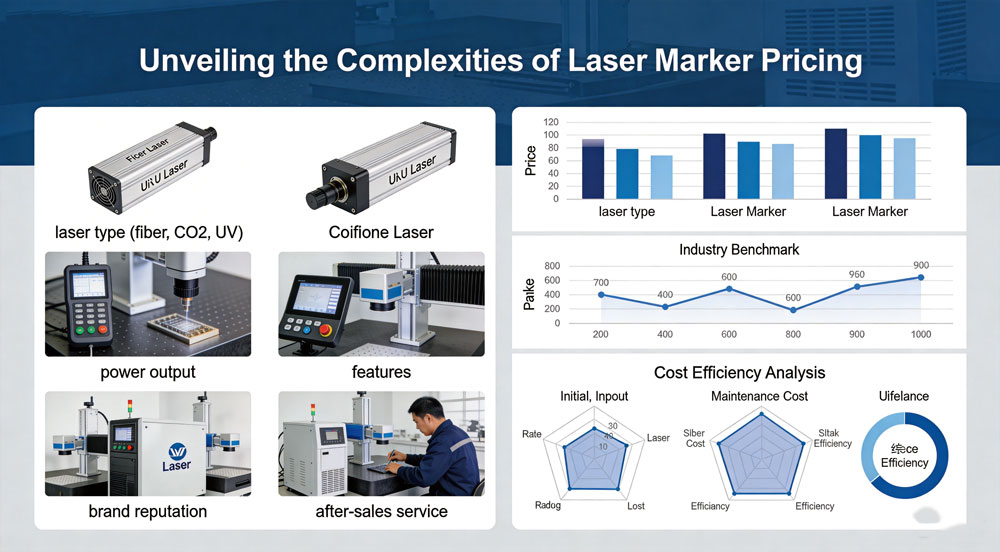
Factors Influencing Laser Marking Machine Prices
1. Laser Type
The type of laser used in a laser marking machine is one of the most significant factors that determine its price. There are several types of lasers commonly used in laser marking machines, including fiber lasers, UV lasers, and CO₂ lasers, each with its own unique characteristics and applications.- Fiber Lasers: Fiber lasers are known for their high power, speed, and efficiency. They are ideal for marking metals and other hard materials, and they offer excellent precision and accuracy. However, fiber lasers are also the most expensive type of laser, due to their advanced technology and high manufacturing costs.
- UV Lasers: UV lasers use ultraviolet light to create marks on materials. They are particularly suitable for marking delicate materials, such as plastics, glass, and ceramics, as they produce minimal heat and do not cause damage to the surface of the material. UV lasers are also more expensive than CO₂ lasers, but they offer superior marking quality and precision.
- CO₂ Lasers: CO₂ lasers are the most common type of laser used in laser marking machines. They are relatively inexpensive and offer good marking quality on a wide range of materials, including wood, paper, and plastics. However, CO₂ lasers are not suitable for marking metals, as they do not produce enough power to create a permanent mark on the surface of the metal.
2. Output Power
The output power of a laser marking machine is another crucial factor that affects its price. The power of a laser is measured in watts, and it determines the speed and depth of the marking process. Generally, the higher the output power of the laser, the more expensive the machine will be. However, it is important to note that higher power does not always mean better performance. The optimal power for a laser marking machine depends on the type of material being marked and the desired marking effect. For example, if you are marking a hard material, such as metal, you will need a laser with a higher output power to create a deep, permanent mark. On the other hand, if you are marking a delicate material, such as plastic, a lower power laser may be sufficient to achieve the desired result.3. Size and Marking Area
The size and marking area of a laser marking machine also play a significant role in determining its price. Larger machines with a larger marking area are generally more expensive than smaller machines, as they require more materials and components to manufacture. However, a larger marking area can also offer greater flexibility and versatility, allowing you to mark larger parts or multiple parts at once. If you only need to mark small parts, a smaller machine with a smaller marking area may be more cost-effective.4. Integration Capabilities
In today’s digital age, the ability to integrate laser marking machines with other industrial automation systems and software is becoming increasingly important. Machines with advanced integration capabilities, such as the ability to connect to a network, communicate with other machines, and store and retrieve data, are generally more expensive than machines with basic integration capabilities. However, the benefits of integration can far outweigh the initial cost, as it can improve efficiency, reduce downtime, and provide real-time data and insights into the marking process.5. Industry-Specific Requirements
The specific requirements of your industry can also have a significant impact on the price of a laser marking machine. For example, if you are operating in a highly regulated industry, such as the medical or aerospace industry, you may need a laser marking machine that meets strict quality and safety standards. These machines may be more expensive than standard machines, as they require additional testing and certification to ensure compliance with regulatory requirements. Additionally, if you need to mark specific materials or achieve a particular marking effect, you may need a machine with specialized features or capabilities, which can also increase the price.Industry-Specific Applications of Laser Marking Machines
1. Automotive Industry
In the automotive industry, laser marking machines are used to mark part numbers, serial numbers, and logos on a wide range of components, including engine parts, transmission parts, and body panels. Fiber laser marking machines are commonly used in this industry, as they offer high power and speed, and they can create deep, permanent marks on metal surfaces. Additionally, some automotive manufacturers are using hybrid laser marking machines, which combine the capabilities of fiber and CO₂ lasers, to mark both metal and plastic components.2. Medical Industry
In the medical industry, laser marking machines are used to mark batch numbers, expiration dates, and regulatory markings on medical devices, implants, and drug delivery systems. UV laser marking machines are often preferred in this industry, as they produce minimal heat and do not cause damage to the delicate surfaces of medical materials. Additionally, UV lasers can create high-contrast marks that are easy to read, even in difficult lighting conditions.3. Aerospace Industry
In the aerospace industry, laser marking machines are used to mark identification marks on a wide range of components, including turbine blades, landing gear, and fuselage parts. Fiber laser marking machines are commonly used in this industry, as they offer high precision and accuracy, and they can create deep, permanent marks on metal surfaces. Additionally, some aerospace manufacturers are using green laser marking machines, which produce a visible green laser beam, to mark components that require high visibility, such as those used in cockpit displays.4. Electronics Industry
In the electronics industry, laser marking machines are used to mark serial numbers, barcodes, and logos on a wide range of components, including printed circuit boards, connectors, and semiconductors. Fiber laser marking machines are often preferred in this industry, as they offer high speed and precision, and they can create small, detailed marks on the surface of electronic components. Additionally, some electronics manufacturers are using UV laser marking machines to mark delicate components, such as silicon wafers, as they produce minimal heat and do not cause damage to the surface of the material.Conclusion
The price of a laser marking machine is influenced by a wide range of factors, including the type of laser, output power, size and marking area, integration capabilities, and industry-specific requirements. By understanding these factors and considering your specific needs and budget, you can choose a laser marking machine that offers the right combination of performance, features, and value. It is important to remember that the cheapest machine may not always be the best option, as it may not meet your specific requirements or offer the level of performance and reliability you need. Conversely, the most expensive machine may not be necessary if you do not require all of its advanced features and capabilities. By carefully evaluating your options and making an informed decision, you can invest in a laser marking machine that will help you improve the quality, efficiency, and traceability of your products, while also providing a good return on your investment. -
AuthorPosts
Viewing 1 post (of 1 total)
- You must be logged in to reply to this topic.