
The packaging industry faces a constant challenge: applying clear, permanent, and high-quality marks on sensitive materials without compromising the substrate’s integrity or aesthetic appeal. Traditional marking methods like inkjet printing or CO2 lasers often fall short, risking damage, smudging, or chemical migration. This is where UV laser for sensitive packaging emerges as a transformative solution, offering unparalleled precision and care for delicate surfaces.
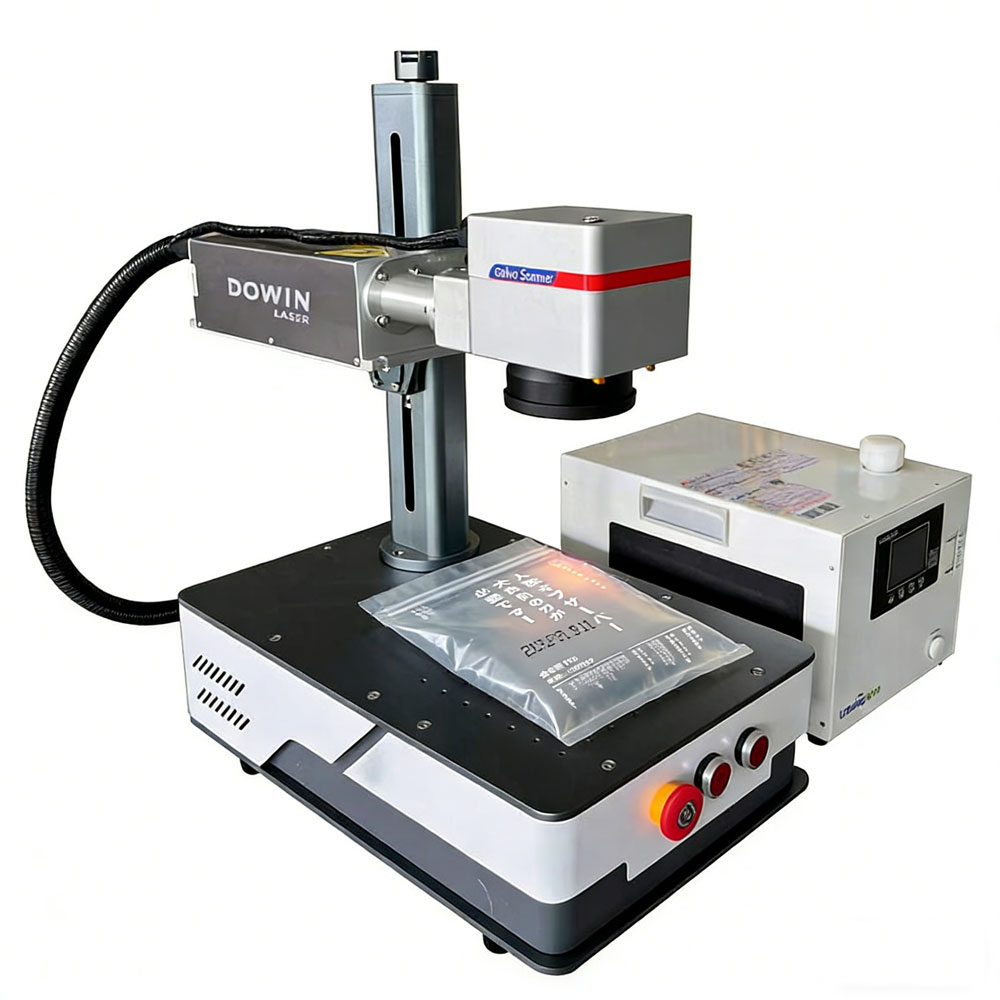
This deep dive analyzes the technology, market drivers, and quantifiable benefits positioning UV lasers as the future of premium and sensitive packaging marking.
Contents
- 1 Understanding the Technology: Why UV Lasers Are Uniquely Suited for Sensitive Packaging
- 2 Industry Data & Market Analysis: The Push Towards Premiumization and Traceability
- 3 Comparative Advantages: UV Lasers vs. Traditional Marking Methods
- 4 Key Applications in Sensitive Packaging
- 5 Implementing UV Laser Marking: Key Considerations
- 6 Conclusion: The Future is Precise and Gentle
Understanding the Technology: Why UV Lasers Are Uniquely Suited for Sensitive Packaging
A UV laser operates at a short wavelength (typically 355 nm), which is a “cold” marking process. Unlike thermal lasers (like fiber or CO2), it doesn’t rely on heat to burn or melt the material. Instead, it uses high-photon energy to break molecular bonds on the surface layer, causing a color change or slight etching through a photochemical reaction.
This fundamental principle yields critical advantages for sensitive materials:
- Minimal Heat-Affected Zone (HAZ): Virtually no thermal stress on the packaging.
- Non-Contact & Abrasion-Free: Eliminates physical damage or weakening of the material.
- High-Contrast, High-Resolution Marks: Achieves exceptionally fine details, including small fonts, complex logos, and scannable 2D codes on tiny areas.
Industry Data & Market Analysis: The Push Towards Premiumization and Traceability
The global adoption of UV laser marking systems is accelerating, driven by hard data and stringent regulations:
- Market Growth: The laser marking market is projected to exceed $5.7 billion by 2028 (MarketsandMarkets). A significant segment of this growth is attributed to the demand for precise, non-invasive marking in the pharmaceutical and food packaging sectors, where UV lasers are the preferred tool.
- Pharmaceutical & Medical Drive: Stringent serialization mandates (e.g., DSCSA in the USA, FMD in the EU) require unique, tamper-evident codes on every product pack. UV lasers can mark directly onto primary packaging—glass vials, IV bags, blister foils, and plastic syringes—without creating pinholes, micro-cracks, or toxic by-products. This ensures patient safety and compliance.
- Cosmetics & Luxury Goods: The “unboxing experience” is paramount. UV lasers deliver pristine, permanent marks on metallized films, coated cartons, acrylics, and delicate laminates used for high-end cosmetics and electronics. This supports brand integrity and combats counterfeiting.
- Sustainability Trends: UV laser marking is a dry, ink-free process. It eliminates the need for consumable inks, solvents, and labels, aligning with corporate sustainability goals and reducing operational waste and long-term cost.
Comparative Advantages: UV Lasers vs. Traditional Marking Methods
| Feature | UV Laser Marking | Inkjet Printing | Traditional Laser (Fiber/CO2) |
|---|---|---|---|
| Material Impact | Minimal to none (cold process) | Risk of smudging, adhesion issues | High HAZ – can melt, burn, or warp sensitive materials |
| Mark Permanence | Excellent, resistant to solvents | Can fade or be rubbed off | Excellent |
| Consumables | None (power only) | Requires inks, solvents, maintenance | None (power only) |
| Operational Cost | Very low long-term | High recurring consumable cost | Low long-term |
| Flexibility | High (easily change mark via software) | Moderate (requires fluid changes) | Moderate (limited on sensitive materials) |
| Code Quality | Extremely high resolution, even on micro-codes | Lower resolution, potential for inconsistency | Good, but can be low-contrast on plastics |
Key Applications in Sensitive Packaging
- Medical Device Tracking: Direct part marking (UDI) on polymer device casings and flexible components.
- Food & Beverage on Flexible Films: Date/batch coding on moisture-sensitive, thin multilayer films without compromising barrier properties.
- Electronics on Static-Sensitive Bags: Marking anti-static packaging for microchips.
- Tamper-Evident Seals: Creating precise, irreversible marks on security labels and seals.
Implementing UV Laser Marking: Key Considerations
For businesses evaluating this technology, focus on:
- Material Compatibility Testing: Always test your specific packaging material with the UV laser system.
- Integration: Modern UV laser markers are designed for integration into high-speed production lines with vision systems for automated verification.
- Regulatory Compliance: Ensure the marking process and any potential surface modification comply with FDA (for food/ drug contact) or relevant regional regulations.
Conclusion: The Future is Precise and Gentle
The data is clear: the demand for UV laser for sensitive packaging is driven by the convergence of regulatory traceability, brand protection, material innovation, and sustainability. As packaging materials become more advanced and complex, the ability to apply a permanent, high-quality mark without damaging the product is no longer a luxury—it’s a critical component of modern manufacturing. By adopting UV laser technology, companies future-proof their operations, ensure compliance, and protect the premium quality of their packaged goods.
Investing in UV laser marking is an investment in precision, reliability, and the integrity of your most sensitive products.