
For industry buyers, laser marking is no longer a “coding alternative.” It is a capital decision that directly affects compliance risk, operating cost, line efficiency, and brand credibility. As food packaging regulations tighten and production complexity increases, the question is no longer whether laser marking works—but whether your current marking strategy is still defensible.
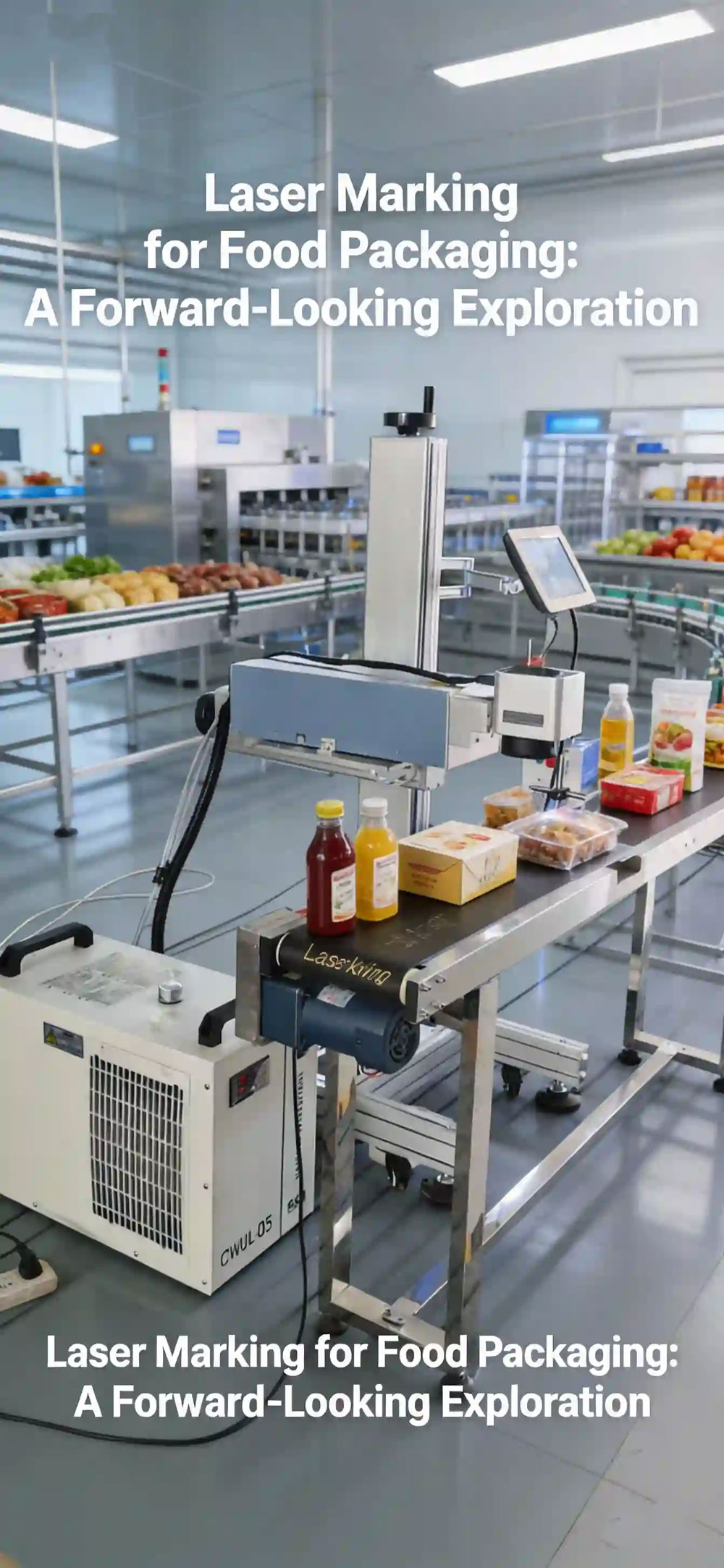
This guide reframes laser marking from a technical feature into a procurement-level strategy.
Contents
- 1 Why Food Packaging Buyers Are Re-Evaluating Marking Technologies
- 2 What Laser Marking Delivers That Ink Cannot
- 3 Material Compatibility: What Buyers Need to Know
- 4 Total Cost of Ownership: The Real Procurement Argument
- 5 Compliance, Recalls, and Audit Readiness
- 6 Line Integration and Scalability
- 7 Sustainability Is No Longer Optional
- 8 Common Buyer Concerns (and the Reality)
- 9 Buyer Conclusion: Laser Marking Is a Risk Strategy, Not a Trend
Why Food Packaging Buyers Are Re-Evaluating Marking Technologies
Across global food manufacturing, three pressures are converging:
- Zero-tolerance traceability requirements (batch, date, serialization)
- Cost volatility driven by consumables, labor, and downtime
- Sustainability mandates eliminating inks, solvents, and excess materials
Traditional inkjet and thermal systems struggle under these pressures. Laser marking addresses all three at once—without adding operational complexity.
For buyers, this matters because marking failures now translate directly into:
- Recall exposure
- Regulatory penalties
- Brand trust erosion
- Line stoppages
Laser marking reduces these risks structurally, not cosmetically.
What Laser Marking Delivers That Ink Cannot
Laser marking does not apply information—it creates it within the packaging material. That distinction changes everything.
From a buyer’s perspective, this means:
- Permanent legibility across transport, cold chain, abrasion, and moisture
- No consumables (no ink, no ribbons, no cartridges)
- Stable output quality independent of humidity or temperature
For high-volume lines, permanence is not a “nice to have.” It is a risk-reduction mechanism.
Material Compatibility: What Buyers Need to Know
Modern food packaging uses mixed and evolving materials. Laser systems now cover nearly all of them when correctly specified.
| Packaging Material | Laser Strategy | Buyer Impact |
|---|---|---|
| Cardboard & Cartons | CO₂ laser | Clean, high-contrast coding without inks |
| Flexible Films | CO₂ / UV laser | No smearing, no migration risk |
| Rigid Plastics | Fiber / UV laser | Stable codes under stress |
| Foils & Laminates | Fiber laser | Permanent marking without adhesion issues |
| Eco / Bio-based Materials | UV / tuned CO₂ | Ink-free compliance with sustainability goals |
Buyer insight: The wrong laser choice is a specification issue—not a technology failure. Proper matching eliminates material risk.
Total Cost of Ownership: The Real Procurement Argument
Laser systems often appear more expensive at purchase. This is where many buyers make the wrong call.
When evaluated over 3–5 years, lasers typically:
- Eliminate recurring consumable costs
- Reduce unplanned downtime
- Cut maintenance intervention frequency
- Lower spare parts inventory
For continuous production lines, the TCO curve favors laser systems decisively—especially where multiple shifts or high SKU turnover exist.
Procurement logic must shift from purchase price to operational cost certainty.
Compliance, Recalls, and Audit Readiness
Regulators increasingly focus on code readability and permanence, not just presence.
Laser marking supports:
- Long-term barcode and 2D code readability
- Consistent contrast for vision inspection systems
- Tamper-resistant identification
For buyers in regulated environments, this means:
- Faster audit approvals
- Reduced rework and rejection rates
- Stronger recall containment capability
Laser marking becomes part of your compliance infrastructure, not just packaging equipment.
Line Integration and Scalability
Modern laser systems are designed for:
- High-speed production lines
- Automated changeovers
- ERP / MES data integration
This enables:
- Real-time variable data marking
- SKU flexibility without hardware changes
- Future-ready serialization and track-and-trace
From a buyer standpoint, this is critical: laser marking scales with your business without scaling complexity.
Sustainability Is No Longer Optional
Ink-based coding introduces:
- Chemical waste
- Cartridge disposal
- VOC concerns
Laser marking eliminates these entirely.
For buyers facing ESG reporting, customer audits, or retailer sustainability requirements, laser systems provide measurable environmental advantages that can be documented and defended.
This is no longer marketing—it is procurement leverage.
Common Buyer Concerns (and the Reality)
“Lasers are too complex.”
Modern systems are largely maintenance-free compared to ink systems.
“Lasers might damage packaging.”
Proper parameter control prevents structural impact. This is a setup issue, not a limitation.
“Ink systems are cheaper.”
Only if downtime, waste, and consumables are ignored—which regulators and CFOs no longer do.
Buyer Conclusion: Laser Marking Is a Risk Strategy, Not a Trend
For industry buyers, laser marking is not about technology enthusiasm—it is about risk management, cost stability, and future compliance.
The companies still debating whether to adopt laser marking are already behind those asking how fast and how extensively to deploy it.
In food packaging, permanent information is permanent value. Laser marking delivers both.