
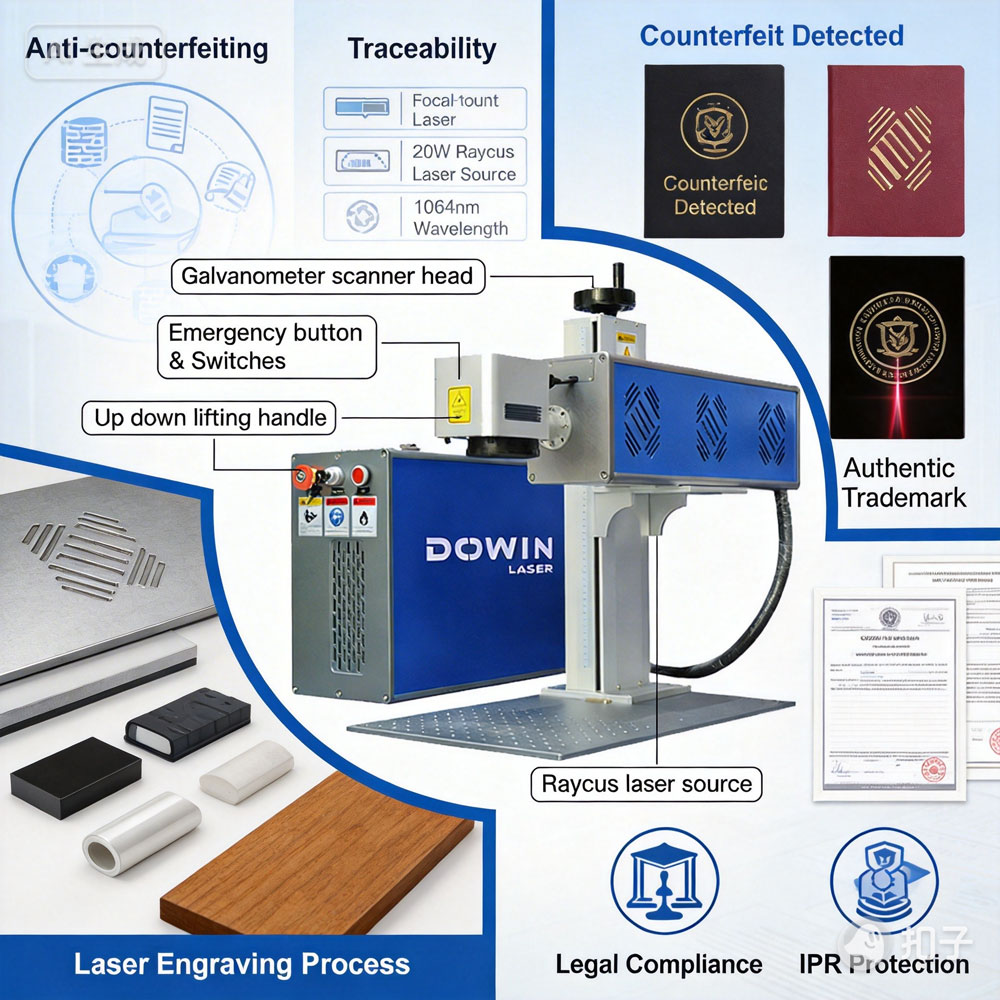
In today’s fiercely competitive business landscape, a brand’s identity is its most valuable asset. It not only differentiates a company from its rivals but also builds trust and loyalty among customers. However, with the rise of counterfeiting and brand infringement, protecting these identities has become more challenging than ever. According to the World Intellectual Property Organization, a staggering 15.5 million trademark applications were filed worldwide in 2022 alone, highlighting the growing urgency for robust brand protection strategies. While legal trademark registration is a crucial first step, it is no longer sufficient to combat the sophisticated tactics of counterfeiters. This is where laser engraving emerges as a game-changer, offering a powerful and innovative solution to safeguard trademarks.
Contents
Understanding Trademark Protection
Trademarks are the visual representations of a brand, such as logos, slogans, and product designs. They serve as a guarantee of quality and authenticity, allowing consumers to easily identify and trust a particular brand. However, in an era where counterfeit goods are becoming increasingly indistinguishable from the real thing, traditional methods of trademark protection are falling short. Counterfeiters are using advanced technologies to replicate trademarks with remarkable accuracy, making it difficult for consumers and authorities to detect fakes. This not only damages the reputation of legitimate brands but also poses significant risks to public health and safety, especially in industries such as pharmaceuticals and electronics.
The Role of Laser Engraving in Trademark Protection
Laser engraving is a cutting-edge technology that uses high-precision laser beams to etch permanent markings onto a variety of materials. These markings can include logos, serial numbers, barcodes, and other unique identifiers that are nearly impossible to replicate without specialized equipment. Here are some of the key ways in which laser engraving enhances trademark protection:
Permanent and Durable Markings
Laser engraving creates marks that are deeply etched into the surface of the material, making them highly resistant to wear, fading, and tampering. Unlike traditional labels and stickers, which can be easily removed or damaged, laser-engraved markings are permanent and will remain intact throughout the product’s lifecycle. This makes it extremely difficult for counterfeiters to alter or remove the trademark, ensuring the authenticity of the product.
High Precision and Detail
Laser engraving machines are capable of producing extremely precise and detailed markings, even on complex and intricate designs. This allows brands to create trademarks that are not only visually appealing but also highly secure. Counterfeiters will struggle to replicate the fine details and accuracy of laser-engraved markings, making it easier to detect fakes.
Versatility Across Materials
Laser engraving can be used on a wide range of materials, including metals, plastics, glass, ceramics, and wood. This makes it a versatile solution for protecting trademarks on various types of products, from luxury goods to industrial components. Whether you need to mark a delicate piece of jewelry or a heavy-duty machine part, laser engraving can deliver consistent and high-quality results.
Tamper-Evident Features
Laser engraving can be used to create tamper-evident seals and markings that will show clear signs of alteration if someone attempts to remove or modify them. This is particularly important in industries where product safety and integrity are critical, such as pharmaceuticals and food packaging. By using laser engraving to create tamper-evident features, brands can ensure that their products are not tampered with during transit or storage, protecting both consumers and their reputation.
Benefits of Laser Engraving for Anti-Counterfeiting Measures
In addition to its role in trademark protection, laser engraving offers a number of other benefits for anti-counterfeiting measures:
Enhanced Security
Laser engraving provides a high level of security by creating markings that are difficult to replicate. This makes it easier for authorities and consumers to identify counterfeit products, reducing the risk of fraud and protecting the interests of legitimate businesses.
Cost-Effectiveness
Laser engraving is a cost-effective solution for anti-counterfeiting measures. Unlike other technologies that require expensive equipment and materials, laser engraving machines are relatively affordable and can be easily integrated into existing production lines. Additionally, laser-engraved markings are permanent and do not require frequent replacement, reducing long-term costs.
Time and Labor Savings
Laser engraving is a fast and automated process that can save businesses time and labor costs. With the ability to mark multiple products simultaneously, laser engraving machines can significantly increase production efficiency, allowing brands to meet the growing demand for their products.
Improved Brand Image
By using laser engraving to protect their trademarks, brands can demonstrate their commitment to quality and authenticity. This can enhance their brand image and reputation, increasing customer trust and loyalty.
Types of Industrial Laser Engraving Machines
There are several types of industrial laser engraving machines available on the market, each with its own unique features and capabilities. Here are some of the most common types:
Fibre Laser Engravers
Fibre laser engravers are known for their high power and speed, making them ideal for deep engraving and marking on metals and other hard materials. They are also highly efficient, consuming less energy than other types of laser engravers.
CO₂ Laser Engravers
CO₂ laser engravers are versatile machines that can be used on a wide range of materials, including plastics, wood, and glass. They are known for their ability to produce high-quality markings with fine details and smooth edges.
UV Laser Engravers
UV laser engravers use ultraviolet light to create markings on materials that are sensitive to heat, such as plastics and glass. They are capable of producing high-contrast markings without causing damage to the material, making them ideal for applications where precision and quality are critical.
How to Implement Laser Engraving for Trademark Protection
Implementing laser engraving for trademark protection requires careful planning and consideration. Here are some steps to help you get started:
Assess Your Needs
The first step is to assess your specific needs and requirements. Consider the type of products you need to mark, the materials they are made of, and the level of security you require. This will help you choose the right laser engraving machine and determine the best marking strategy.
Choose the Right Equipment
There are many different types of laser engraving machines available on the market, each with its own unique features and capabilities. It is important to choose a machine that is suitable for your specific needs and budget. Consider factors such as power, speed, precision, and compatibility with your existing production line.
Optimize Your Designs
Before you start laser engraving, it is important to optimize your trademark designs for marking. This may involve simplifying complex designs, adjusting the contrast and depth of the markings, and ensuring that the markings are easily readable. You can use software tools provided with your laser engraving machine to help you optimize your designs.
Test and Validate
Before implementing laser engraving on a large scale, it is essential to test and validate the process on sample materials. This will help you ensure that the markings meet your quality standards and that the machine is operating correctly. You may need to make adjustments to the machine settings or design based on the results of the tests.
Train Your Staff
Laser engraving machines require skilled operators to ensure that they are used correctly and safely. It is important to provide your staff with comprehensive training on how to operate the machine, maintain it, and troubleshoot any issues that may arise. This will help you maximize the efficiency and effectiveness of your laser engraving process.
Conclusion
In conclusion, laser engraving is a powerful and innovative technology that offers a wide range of benefits for trademark protection and anti-counterfeiting measures. Its ability to create permanent, precise, and tamper-evident markings makes it an ideal solution for protecting the identity and integrity of brands in today’s competitive business environment. By implementing laser engraving, businesses can enhance their security, reduce the risk of counterfeiting, and improve their brand image. As technology continues to evolve, laser engraving is likely to become even more advanced and widely adopted, playing an increasingly important role in the fight against counterfeiting.