
Home › Forums › Laser Marking Forum › CO2 Laser Engraving on Wood
Tagged: Laser Engraving on Wood
- This topic is empty.
-
AuthorPosts
-
03/11/2026 at 4:51 AM #814
Dwmin
KeymasterWood is one of the oldest materials used by human civilization. From ancient carvings and furniture to modern architectural design and personalized gifts, wood has always carried a unique emotional and cultural value. But the way we shape and decorate wood is undergoing a dramatic transformation.
Today, CO₂ laser engraving on wood is redefining how wooden products are designed, manufactured, and personalized, bringing digital precision to a material that has traditionally relied on manual craftsmanship.
This shift is not just technological—it reflects a broader transformation in global manufacturing.
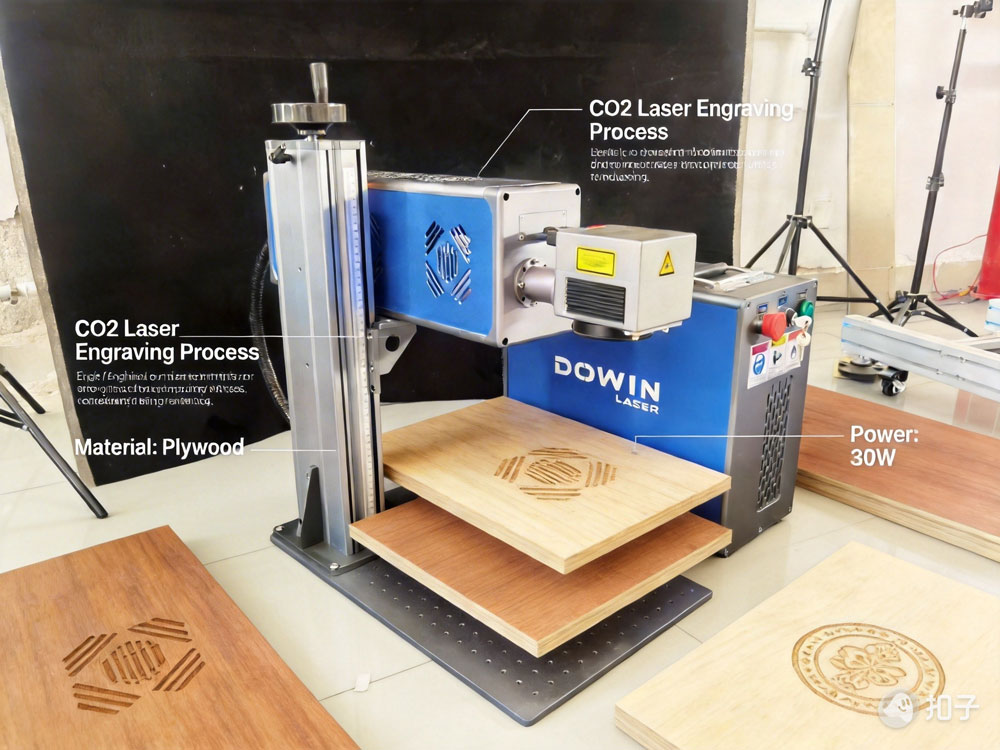
The Expanding Market Behind Laser-Engraved Wood
The global laser engraving industry has grown rapidly over the past decade. Market research shows the laser engraving market is expected to reach around $5.3 billion by 2030, driven by demand across manufacturing, crafts, packaging, and personalization industries.
CO₂ laser systems remain the dominant technology for non-metal materials such as wood, acrylic, leather, and paper. They hold about 45–60% of the global laser engraving market, reflecting their versatility and reliability.
By 2023, more than 950,000 CO₂ laser systems were already operating worldwide, many of them used in woodworking, signage, and craft manufacturing.
These numbers reveal something important: laser engraving is no longer a niche tool for hobbyists—it has become an industrial production technology.
Why CO₂ Lasers Work Perfectly with Wood
The secret behind this compatibility lies in physics.
CO₂ lasers emit light at a wavelength of 10.6 micrometers, which is strongly absorbed by organic materials like wood. When the laser beam hits the surface, the energy converts into heat, vaporizing microscopic layers of wood and producing precise engravings.
This interaction produces several advantages:
High-Precision Detail
CO₂ laser engraving can create extremely fine patterns, with line widths as small as 0.1 mm, allowing intricate artwork, photographs, and complex textures to be engraved directly into wood.
Non-Contact Processing
Traditional carving tools physically cut into wood, which can create stress, splintering, or deformation. Laser engraving is completely contact-free, preserving the structural integrity of the material.
Clean and Efficient Processing
Unlike mechanical carving, laser engraving produces no chips or solid debris, only smoke and dust that can be removed through extraction systems.
Compatibility with Many Wood Types
CO₂ lasers can engrave a wide range of materials including:
-
plywood
-
MDF
-
bamboo
-
softwoods
-
hardwoods
The process can also be adjusted to control engraving depth and contrast depending on the wood density.
Where Laser-Engraved Wood Is Used
The versatility of CO₂ laser engraving has opened new creative and industrial possibilities for wooden products.
Personalized Gifts and Crafts
One of the fastest-growing segments of the laser engraving market is personalized products. Wood items such as:
-
cutting boards
-
photo frames
-
wooden watches
-
decorative plaques
-
wedding gifts
can be engraved with names, messages, or artwork.
Because the engraving process is digitally controlled, each item can be unique without increasing production costs.
Architectural and Interior Design
Architects and designers increasingly use laser-engraved wood panels for decorative walls, furniture surfaces, and interior installations.
Laser technology enables complex geometric patterns that would be extremely difficult to carve by hand.
Signage and Branding
Wooden signage is widely used in restaurants, boutiques, and eco-friendly retail spaces. Laser engraving creates durable, high-contrast logos and text that resist fading or wear.
Packaging and Luxury Products
Premium brands are using laser-engraved wooden packaging for products like wine, spirits, watches, and collectibles.
The engraved surface adds a tactile and authentic aesthetic that printed packaging cannot replicate.
Sustainability: A Hidden Advantage of Laser Wood Engraving
Sustainability has become a major issue in modern manufacturing, and laser technology offers several environmental benefits.
Laser engraving:
-
eliminates chemical inks and dyes
-
reduces material waste
-
minimizes mechanical damage to wood
-
consumes less energy compared with many traditional engraving systems
Because the process removes only the exact amount of material required, waste is significantly reduced.
In addition, the engraved image becomes part of the wood itself rather than an applied layer, making the product more durable and longer lasting.
For companies pursuing sustainable manufacturing strategies, this is a major advantage.
The Real Revolution: Digital Craftsmanship
Most discussions about laser engraving focus on efficiency or automation.
But the deeper transformation is philosophical.
Woodworking has traditionally been defined by manual craftsmanship—the skill of the artisan shaping the material by hand. Laser technology does not eliminate craftsmanship, but it changes its role.
Instead of carving wood directly, designers now craft digital patterns and algorithms that control the engraving process.
This shift creates a new form of creativity:
digital craftsmanship.
A single laser system can produce:
-
traditional decorative carvings
-
modern geometric art
-
photorealistic images
-
generative AI-designed patterns
The creative boundaries of woodworking are expanding far beyond traditional carving tools.
The Future of Laser-Engraved Wood Products
As manufacturing technology evolves, CO₂ laser systems are becoming part of intelligent production ecosystems.
Future developments may include:
-
AI-generated engraving designs
-
automated laser production lines
-
real-time customization from e-commerce orders
-
3D laser engraving on curved wooden surfaces
When these technologies converge, wooden products will shift from mass production toward mass personalization.
In the near future, consumers may order furniture, décor, or gifts online and receive items engraved specifically for them—produced automatically by digital manufacturing systems.
Conclusion
CO₂ laser engraving has brought a quiet revolution to the woodworking industry. By combining digital precision with the timeless appeal of natural materials, laser technology enables designers and manufacturers to create wooden products that are more detailed, more personalized, and more sustainable than ever before.
But perhaps the most interesting transformation is conceptual.
For centuries, wood carried the marks of hand tools.
Today, it increasingly carries the marks of data, algorithms, and light.
And that may be the most fascinating chapter yet in the long history of woodworking.
-
-
AuthorPosts
- You must be logged in to reply to this topic.