
Home › Forums › Laser Marking Forum › CO2 Laser Marking on Denim Fabric
Tagged: Marking on Denim Fabric
- This topic is empty.
-
AuthorPosts
-
03/11/2026 at 3:18 AM #811
Dwmin
KeymasterFor decades, denim has represented rebellion, individuality, and cultural identity. From classic blue jeans to designer streetwear, the fabric has become one of the most influential materials in the global fashion industry. Yet behind the rugged aesthetic lies a manufacturing process that has traditionally been slow, resource-intensive, and environmentally damaging.
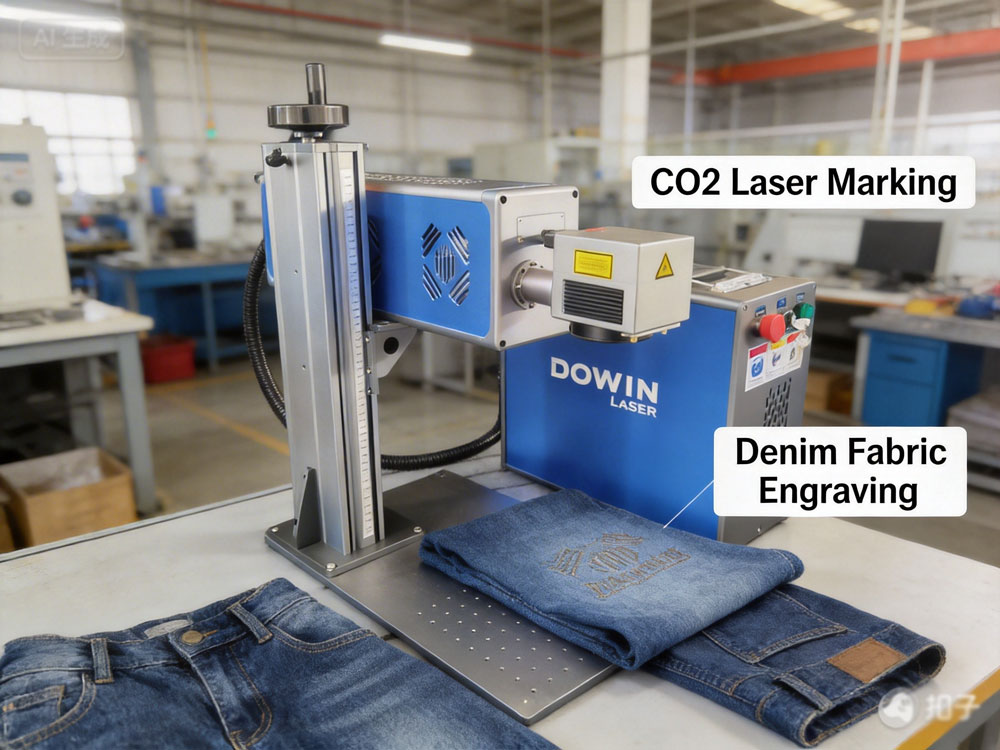
Today, a technological shift is rewriting that story. CO₂ laser marking on denim fabric is rapidly transforming how jeans are designed, finished, and customized, bringing digital precision to one of fashion’s most iconic textiles.
What was once a niche technology is now reshaping a multi-billion-dollar industry.
The Market Behind Laser-Processed Denim
The adoption of laser technology in denim production is not just a trend—it is a rapidly growing global market.
Recent research estimates the laser-engraved denim market reached about $1.42 billion in 2024 and is projected to grow to nearly $3.87 billion by 2033, representing an annual growth rate of roughly 11.5%.
Within this market:
-
Jeans account for over 48% of total revenue, making them the largest application segment.
-
CO₂ laser systems represent about 62% of installations, dominating denim processing technology.
-
The Asia-Pacific region is expected to experience the fastest growth as textile manufacturing modernizes.
The broader laser engraving industry is also expanding rapidly, projected to exceed $5.3 billion globally by 2030.
Fashion, it turns out, is becoming increasingly digital.
How CO₂ Laser Marking Works on Denim
Denim is traditionally dyed with indigo, creating the deep blue color associated with classic jeans. When a CO₂ laser beam scans across the fabric, it selectively removes or fades the dye layer rather than cutting through the fibers.
By precisely controlling laser power and speed, manufacturers can create:
-
faded vintage effects
-
whisker patterns
-
distressed textures
-
logos and artwork
-
detailed graphics
The laser essentially “draws” on denim by altering color contrast.
Unlike traditional finishing processes, the laser can produce greyscale designs by adjusting beam intensity, allowing highly detailed shading across the fabric surface.
The result is a clean, controlled aesthetic that would be extremely difficult to achieve manually.
Why the Denim Industry Is Embracing Laser Technology
Several powerful forces are pushing denim manufacturers toward laser processing.
1. Sustainability Pressure
The traditional denim finishing process is notoriously wasteful.
Classic stone-washing and chemical treatments require large volumes of water, pumice stones, and bleaching chemicals. Laser technology offers a radically different approach.
Studies show that laser finishing can reduce water consumption by up to 90% compared with traditional denim washing methods.
In an era where sustainability drives brand decisions, this advantage is enormous.
2. Faster Production
Manual distressing and finishing processes require skilled labor and significant production time.
Laser technology can produce the same effects dramatically faster. In some production environments, laser systems can process around 60 jeans per hour, compared with about 10 per hour using manual finishing techniques.
This productivity leap allows fashion brands to react quickly to trends.
3. Mass Customization
Consumers increasingly want unique fashion items rather than standardized products.
Laser engraving enables manufacturers to create:
-
limited-edition designs
-
personalized denim jackets
-
branded artwork on jeans
-
collaborative artist collections
Because the process is digitally controlled, design changes require no new tooling or molds.
Every garment can be different.
Applications of CO₂ Laser Marking in Denim
Laser marking has opened a wide creative playground for designers and manufacturers.
Laser Distressing
Classic “vintage” denim looks—such as whiskers, abrasions, and faded patches—can be produced quickly with lasers rather than stones or sandblasting.
Graphic Denim
Fashion brands now experiment with intricate artwork engraved directly onto jackets, jeans, and shirts.
Laser-etched graphics have become particularly popular in streetwear culture.
Brand Identity
Luxury fashion labels use laser engraving to apply logos and subtle patterns that enhance product identity.
Functional Marking
Laser systems can even mark QR codes or tracking information directly onto denim surfaces for authentication and supply-chain tracking.
This blends fashion with digital technology.
The Sustainability Revolution in Denim Manufacturing
For years, denim production has faced criticism for its environmental impact. Processes like sandblasting and chemical bleaching not only consume resources but also pose health risks to workers.
Laser technology addresses many of these concerns:
-
reduced water consumption
-
elimination of harsh chemicals
-
lower energy usage
-
fewer consumables
-
consistent production quality
As global fashion brands commit to sustainability goals, laser processing is becoming a critical tool for achieving them.
A Contrarian Perspective: Laser Will Change Denim Design Itself
Most discussions focus on efficiency or sustainability. But the deeper impact of laser technology may be creative freedom.
Traditional denim design was limited by mechanical tools and manual techniques.
Laser technology removes those constraints.
Designers can now experiment with:
-
photographic textures
-
complex geometric patterns
-
AI-generated artwork
-
real-time customized designs
Imagine a future where consumers upload their own artwork online, and factories laser-engrave it directly onto their jeans before shipping.
In that world, denim is no longer just clothing.
It becomes a personal canvas.
The Future: Digital Fashion Manufacturing
As Industry 4.0 technologies spread across textile factories, laser systems are becoming part of fully automated production lines.
Future denim manufacturing may include:
-
AI-generated design patterns
-
automated laser finishing robots
-
digital pattern libraries shared across global factories
-
real-time customization from online orders
When these systems converge, fashion production will shift from mass manufacturing toward mass personalization.
Conclusion
CO₂ laser marking is transforming the denim industry by combining precision technology with creative design possibilities. From sustainable manufacturing to personalized fashion, lasers are enabling a new generation of denim products that are faster to produce, environmentally responsible, and visually unique.
But the real revolution is not just technical.
For the first time in history, denim—once shaped by stones, sandpaper, and chemicals—is being shaped by data, algorithms, and digital design.
And that change is only just beginning.
-
-
AuthorPosts
- You must be logged in to reply to this topic.