
Home › Forums › Laser Marking Forum › CO2 Laser Marking on Leather
Tagged: Laser Marking on Leather
- This topic is empty.
-
AuthorPosts
-
03/10/2026 at 3:37 AM #804
Dwmin
KeymasterIntroduction: Leather Craft Meets Digital Manufacturing
Leather has been a symbol of durability, luxury, and craftsmanship for thousands of years. From premium handbags and designer shoes to automotive interiors and handcrafted accessories, leather remains one of the most valued materials in modern manufacturing.
However, the methods used to decorate and mark leather have changed dramatically. Traditional techniques such as embossing, hot stamping, and screen printing are increasingly being replaced by CO₂ laser marking technology, which provides unmatched precision, flexibility, and efficiency.
As the global demand for personalized products continues to rise, CO₂ laser engraving machines are becoming an essential tool for leather manufacturers. Today, businesses ranging from luxury fashion brands to small customization workshops are adopting laser technology to stay competitive in a rapidly evolving market.
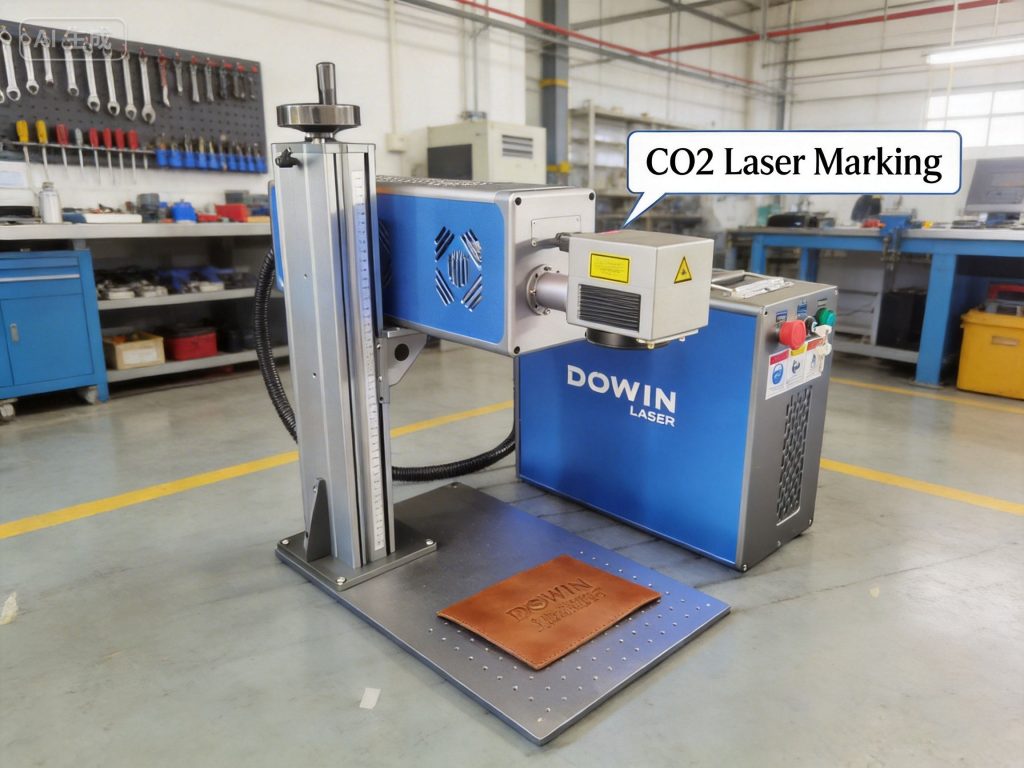
Why CO₂ Laser Marking Works Perfectly on Leather
CO₂ lasers operate at a wavelength of 10.6 microns, which is highly absorbed by organic materials such as leather, wood, paper, and textiles. When the laser beam contacts the leather surface, it gently burns or carbonizes the top layer, producing a permanent, high-contrast mark.
This process creates extremely precise engravings without damaging the surrounding material.
Key advantages of CO₂ laser marking on leather
1. High Precision and Detail
Laser systems can engrave extremely fine graphics, including logos, decorative textures, serial numbers, barcodes, and even photographic patterns. The level of detail is far beyond what traditional stamping techniques can achieve.
2. Non-Contact Processing
Unlike embossing or hot stamping, laser engraving does not require physical contact with the leather. This prevents deformation, scratches, or pressure damage on premium materials.
3. No Tooling or Mold Costs
Traditional leather stamping requires customized molds for each design. CO₂ laser marking eliminates this requirement completely. A digital design file can be engraved instantly, allowing rapid design changes and small-batch production.
4. High Production Efficiency
Laser marking machines operate at high speed and can run continuously in automated production lines. This dramatically reduces production time and labor costs.
Market Trends Driving Laser Marking in the Leather Industry
The global laser marking market has been growing steadily, driven by automation and traceability requirements across industries. Analysts predict the market will exceed $5 billion within the next decade, with leather processing representing an important application sector.
Several industry trends are accelerating the adoption of CO₂ laser technology in leather manufacturing.
1. The Rise of Personalized Products
Consumers increasingly expect products tailored to their identity. Customized names, initials, brand logos, and unique artwork are becoming standard features in leather goods.
Laser engraving enables manufacturers to produce customized items quickly without slowing down production.
This capability is fueling the rapid growth of:
-
personalized wallets
-
engraved leather belts
-
custom handbags
-
laser-marked notebooks
-
branded promotional leather products
2. E-Commerce Customization Platforms
Online customization platforms now allow customers to design their own leather products before purchasing.
Once the order is placed, production systems send the design directly to a laser engraving machine. This digital workflow enables mass customization, where every product can be different without increasing manufacturing complexity.
3. Automation in Leather Manufacturing
Modern factories increasingly rely on automated equipment to maintain consistent quality while reducing labor costs. Laser marking systems integrate easily with automated conveyor lines, robotic loading systems, and smart manufacturing software.
As Industry 4.0 technologies expand, laser engraving is becoming a standard component of intelligent leather production lines.
Common Applications of CO₂ Laser Marking on Leather
Laser engraving technology is now widely used across multiple leather product sectors.
Leather Fashion Accessories
Laser marking allows fashion brands to create intricate decorative elements and precise brand logos on products such as:
-
wallets
-
handbags
-
belts
-
shoes
-
watch straps
Designers can experiment with complex patterns and textures that would be difficult or impossible using traditional tools.
Automotive Leather Interiors
Automotive manufacturers increasingly use laser engraving to decorate leather seats and interior panels. Laser-etched patterns add aesthetic value while maintaining consistent production quality.
Luxury car brands often use laser engraving to integrate logos, decorative patterns, and customized interior designs.
Corporate Branding and Promotional Gifts
Companies frequently use laser engraving to produce branded leather gifts, including:
-
leather notebooks
-
keychains
-
document folders
-
executive accessories
Laser technology allows each item to include unique information such as names, serial numbers, or QR codes.
Handmade and Small-Batch Leather Craft
Small leather studios and independent artisans are adopting compact CO₂ laser engravers to expand their product offerings. These machines allow craftsmen to combine traditional hand-stitched leatherwork with modern engraving techniques.
Environmental Benefits of Laser Marking
Sustainability has become a major concern in modern manufacturing, and laser technology provides several environmental advantages.
Traditional decoration methods often rely on:
-
chemical inks
-
solvent-based dyes
-
metal stamping molds
-
multiple production steps
Laser marking eliminates many of these materials, reducing chemical waste and simplifying the production process.
In addition, because laser engraving is highly precise, it minimizes material waste and reduces the need for secondary processing.
As environmental regulations tighten worldwide, these benefits make laser marking an attractive solution for sustainable leather manufacturing.
The Future of Leather Marking Technology
The next generation of leather engraving technology will be defined by intelligent manufacturing systems.
Future developments may include:
-
AI-assisted design optimization
-
automated laser engraving production lines
-
real-time quality monitoring systems
-
integration with e-commerce customization platforms
These innovations will allow manufacturers to produce fully personalized leather products at industrial scale.
In the coming years, the leather industry may shift from traditional mass production to mass personalization, where every product can be uniquely customized while maintaining high efficiency.
FAQ: CO₂ Laser Marking on Leather
Can CO₂ lasers damage leather?
When properly configured, CO₂ lasers engrave only the surface layer of leather. The process creates permanent marks without weakening the material.
What types of leather can be laser engraved?
CO₂ lasers can mark many types of leather, including:
-
genuine leather
-
vegetable-tanned leather
-
synthetic leather (PU leather)
However, different materials require optimized laser parameters.
Is laser engraving better than embossing?
Laser engraving offers greater flexibility, faster setup, and lower tooling costs. However, embossing may still be preferred for certain deep-texture decorative effects.
Conclusion
CO₂ laser marking has become a powerful tool in modern leather manufacturing. By combining precision engraving, digital flexibility, and environmentally friendly processing, laser technology is helping the leather industry move toward a new era of intelligent production.
As consumer demand for personalization continues to grow, manufacturers that adopt laser marking systems will gain a significant competitive advantage.
In a world increasingly driven by customization and digital design, CO₂ laser engraving ensures that leather products remain both timeless and technologically advanced.
-
-
AuthorPosts
- You must be logged in to reply to this topic.