
Home › Forums › Laser Marking Forum › CO2 Laser Marking on Packaging Bags
Tagged: Laser Marking on Packaging Bags
- This topic is empty.
-
AuthorPosts
-
03/09/2026 at 5:18 AM #801
Dwmin
KeymasterA Quiet Revolution in Industrial Marking
In the past, marking information on products was a simple mechanical task—ink stamps, labels, or thermal transfer printers applied dates, batch numbers, and logos. Today, that world is rapidly changing.
Across global manufacturing sectors—from food packaging to consumer electronics—CO₂ laser marking technology is becoming the new industrial standard. It enables manufacturers to engrave permanent, high-contrast markings on materials such as acrylic sheets, plastic films, and flexible packaging bags without inks or physical contact.
What looks like a small technological shift is actually part of a much larger transformation. The convergence of automation, traceability requirements, and sustainable manufacturing is pushing laser marking from a niche process into the core of modern production systems.
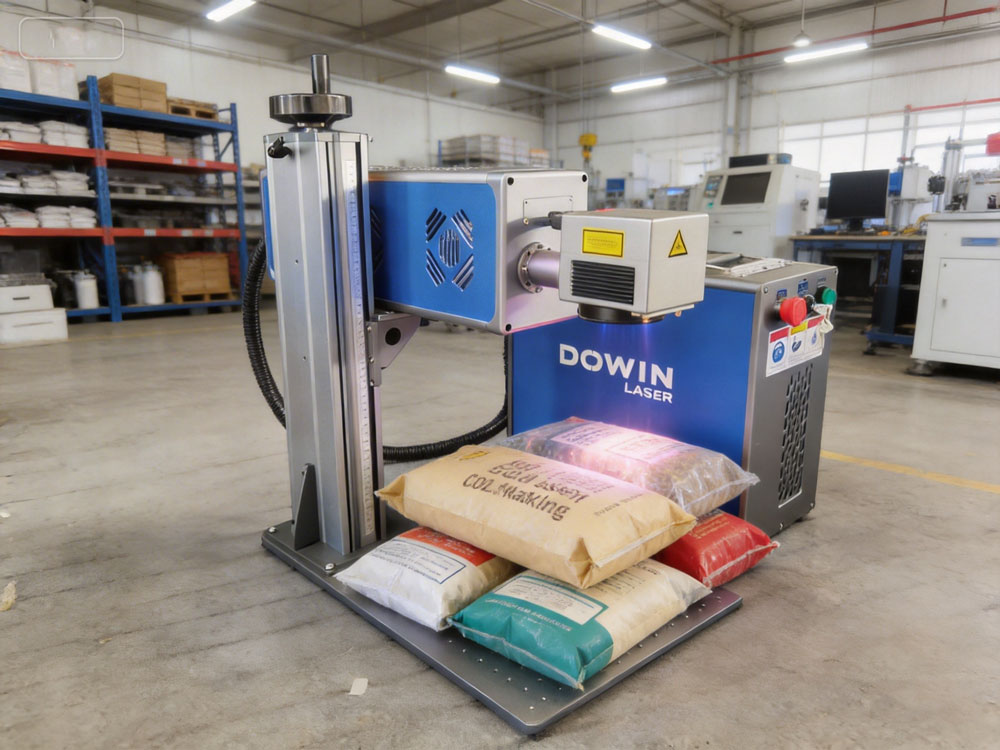
Why CO₂ Lasers Dominate Non-Metal Marking
CO₂ lasers operate at a wavelength of about 10.6 micrometers, which is strongly absorbed by organic and polymer materials. This makes them ideal for processing materials such as:
-
acrylic (PMMA)
-
PE / PP packaging films
-
paper and cardboard
-
coated labels and plastics
Because these materials absorb the laser energy efficiently, the beam can precisely melt, vaporize, or alter the surface without mechanical contact.
The result is a process with several industrial advantages:
-
permanent markings that do not fade
-
extremely fine resolution
-
no consumables such as ink or ribbons
-
minimal maintenance requirements
This combination explains why laser coding systems are rapidly replacing traditional printing technologies in high-volume manufacturing.
The Explosion of Laser Coding in Packaging Bags
The global packaging industry processes billions of units every day. Every bag, pouch, or wrapper must carry essential information such as:
-
production date
-
expiration date
-
batch number
-
QR code or barcode
-
regulatory information
Historically, these codes were applied using inkjet printers. But ink systems require solvents, maintenance, and frequent cartridge replacements.
CO₂ laser systems change the economics entirely.
Modern laser coding systems can mark flexible packaging films and plastic bags directly on high-speed production lines, sometimes reaching conveyor speeds of hundreds of meters per minute.
Because the process is contactless, it does not distort thin films or delicate packaging materials.
For industries like food, pharmaceuticals, and cosmetics, this brings several critical benefits:
1. Permanent Traceability
Laser marks cannot be wiped off or smudged like ink. This provides reliable product traceability throughout the supply chain.
2. Anti-Counterfeiting
Unique codes and serialized data can be engraved directly onto packaging bags, making tampering much harder.
3. Clean Production
Without inks or solvents, the process reduces chemical waste and contamination risks.
In large automated factories running 24/7 production lines, these advantages translate directly into lower operational costs and improved reliability.
Acrylic: Where Technology Meets Design
While packaging bags represent the industrial side of laser marking, acrylic reveals its creative potential.
Acrylic—widely used in signage, lighting panels, and consumer products—responds uniquely to CO₂ laser energy. Instead of producing dark engravings, the laser typically creates frosted white markings.
This happens because the laser slightly melts the acrylic surface and creates microscopic irregularities. These structures scatter light, producing a distinctive white effect.
The result is both elegant and durable.
Unlike paint or screen printing, the engraving becomes part of the material itself.
Applications include:
-
architectural signage
-
decorative panels
-
illuminated displays
-
product branding
-
custom gifts and artwork
In many design industries, laser-etched acrylic has become a signature aesthetic.
Data, Automation, and the Rise of “Smart Marking”
What truly makes laser marking powerful is its compatibility with digital manufacturing systems.
Modern laser coding machines are not standalone tools. They are integrated directly into smart production lines, receiving real-time data from factory software.
When a packaging bag moves along a conveyor belt, the laser can automatically engrave:
-
production time
-
serial number
-
plant location
-
traceability code
All of this information can change dynamically for every single product.
This capability transforms laser marking into something far more significant than labeling. It becomes part of the industrial data infrastructure.
In other words, every laser mark becomes a physical gateway to digital information.
Breaking the Old Mindset
Most manufacturers still think of laser marking as a replacement for ink printing.
That mindset is too narrow.
The real value of CO₂ laser technology lies in its ability to merge identification, design, and data into one process.
For packaging bags, laser coding creates a permanent identity for each product.
For acrylic, it turns a simple material into a medium for visual storytelling.In both cases, laser technology is no longer just a tool—it is becoming part of the product experience.
The Future: When Packaging Becomes Interactive
Looking forward, the next stage of laser marking will likely combine several emerging technologies:
-
AI-optimized laser parameters for different materials
-
ultra-high-speed “flying” laser systems for massive production lines
-
anti-counterfeiting micro-patterns invisible to the naked eye
-
interactive QR ecosystems connecting packaging to digital platforms
Imagine scanning a laser-marked code on a snack bag and instantly seeing its manufacturing history, carbon footprint, and supply chain journey.
That future is already being built.
Final Reflection
CO₂ laser marking on packaging bags and acrylic materials may seem like two separate applications, but they share the same underlying transformation.
Both represent a shift from temporary labeling to permanent information embedded directly into materials.
In a world increasingly driven by traceability, sustainability, and customization, the humble laser mark is becoming far more than a simple engraving.
It is turning everyday materials—plastic film and transparent acrylic—into data carriers, design surfaces, and identity markers for the products of the future.
-
-
AuthorPosts
- You must be logged in to reply to this topic.