
Home › Forums › Laser Marking Forum › Laser Engraving Aluminum: Precision, Speed, and Industrial Impact
- This topic is empty.
-
AuthorPosts
-
03/16/2026 at 2:41 AM #833
Dwmin
KeymasterAluminum is one of the most widely used metals in modern manufacturing. From aerospace structures and automotive parts to consumer electronics and decorative products, its combination of light weight, corrosion resistance, and strength has made it indispensable in global industry. As aluminum usage continues to grow, manufacturers increasingly rely on laser engraving technology to mark, identify, and customize aluminum components with exceptional precision.
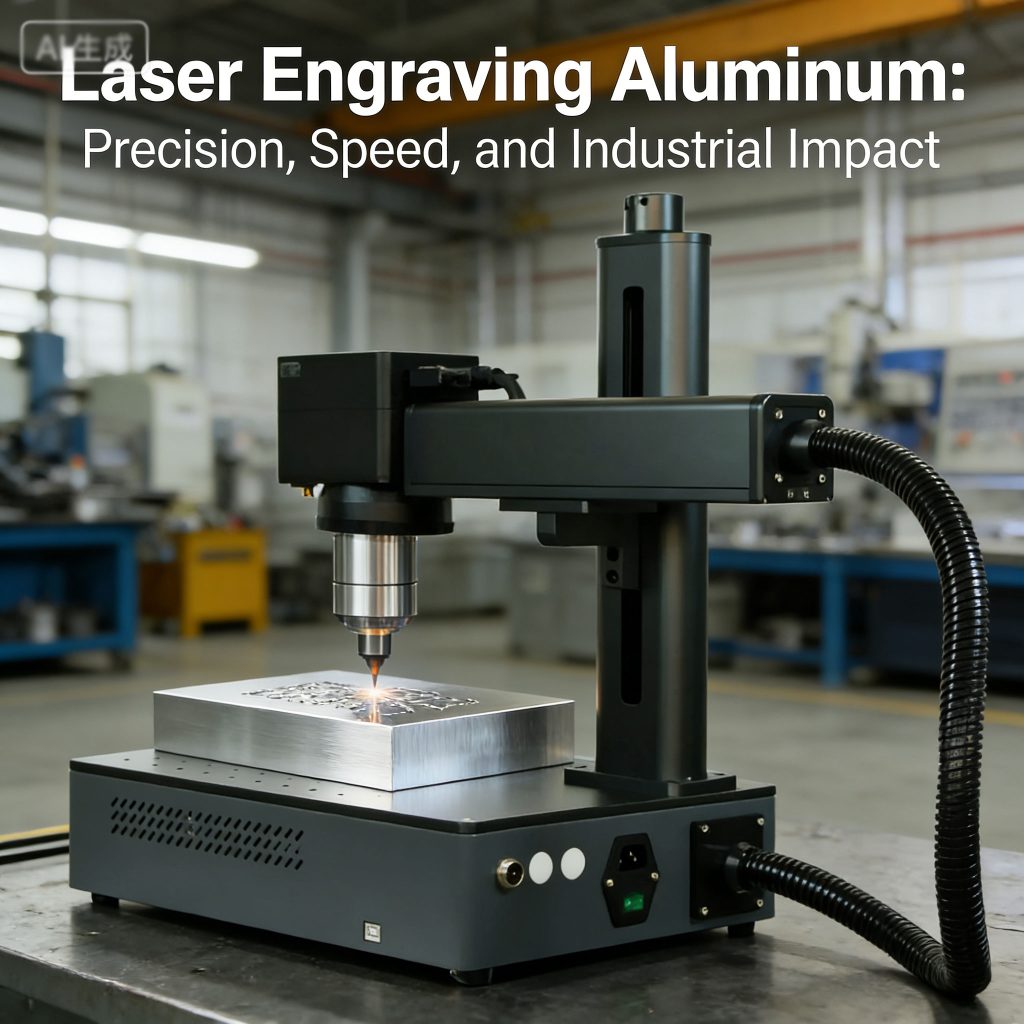
Laser engraving has transformed how aluminum products are processed. What once required mechanical tools, chemical etching, or printing can now be achieved through a beam of concentrated light that permanently modifies the metal surface.
Also Read: Aluminum Laser Marking and Engraving: A Future-Focused Perspective
Why Aluminum Is Ideal for Laser Engraving
Aluminum possesses several properties that make it particularly suitable for laser processing. It has a uniform structure, strong thermal conductivity, and a naturally protective oxide layer. These characteristics allow laser energy to interact with the metal surface in predictable ways, producing clean and precise marks.
Laser engraving works by directing a focused beam of energy onto the aluminum surface. The intense heat vaporizes or melts microscopic portions of the metal, creating engraved patterns based on digital designs.
Unlike printing or coating, this process alters the material itself, meaning the marking becomes part of the metal surface and cannot easily fade or wear away.
Because the laser spot can be extremely small—often measured in microns—engraving systems can create detailed text, barcodes, QR codes, or intricate logos with remarkable clarity.
How the Laser Engraving Process Works
Although the concept appears simple, professional laser engraving requires precise control over several technical parameters.
Key factors include:
-
Laser power: determines how much material is removed during engraving.
-
Pulse energy and frequency: influence engraving speed and surface finish.
-
Spot size and focal distance: affect the concentration of laser energy and the accuracy of the mark.
-
Scanning speed and number of passes: control engraving depth and contrast.
By adjusting these parameters, operators can produce anything from subtle surface markings to deep industrial engravings.
The laser removes aluminum layer by layer through a process known as ablation, allowing complex patterns or identification codes to be formed with high consistency.
Different Types of Aluminum and Their Engraving Behavior
Not all aluminum surfaces behave the same under laser energy. The type of aluminum significantly affects the engraving method and result.
Bare Aluminum
Raw aluminum alloys are highly reflective and conduct heat quickly, which can make them more challenging to engrave. To overcome this, high-peak-power fiber lasers with short pulses are commonly used to achieve efficient material removal.
These systems allow deep engraving with minimal heat-affected zones.
Anodized Aluminum
Anodized aluminum is actually easier to engrave. The laser simply removes or modifies the thin anodized layer, revealing the metal beneath and creating high-contrast markings.
This process is widely used for:
-
nameplates
-
electronics housings
-
consumer products
-
decorative panels
Because only the surface coating is affected, the process is extremely fast while maintaining excellent visual clarity.
Painted or Powder-Coated Aluminum
When aluminum surfaces are painted or coated, the laser removes the coating instead of the metal itself. This produces crisp markings without damaging the underlying material.
The method is common in industrial equipment labeling and product branding.
Advantages of Laser Engraving Aluminum
Laser engraving offers several advantages over traditional engraving technologies.
Exceptional Precision
Laser beams can produce extremely fine lines and detailed graphics, making them ideal for intricate designs and micro-marking.
Permanent Markings
Because the process changes the aluminum surface itself, the markings remain durable even in harsh environments.
Non-Contact Processing
Unlike mechanical engraving, the laser never physically touches the metal, preventing deformation or damage to thin aluminum sheets.
High Production Speed
Laser systems can engrave codes or logos in seconds, making them suitable for automated manufacturing lines.
Environmentally Friendly
Laser engraving typically requires no inks, chemicals, or cutting tools, reducing waste and environmental impact.
Industrial Applications Driving Demand
The demand for aluminum laser engraving continues to grow across multiple industries.
Automotive and Electric Vehicles
Manufacturers engrave serial numbers, data matrix codes, and traceability information onto aluminum components such as battery housings and structural parts.
Aerospace Engineering
Aircraft components made from aluminum alloys require permanent identification that can withstand extreme temperature changes and mechanical stress.
Consumer Electronics
Laptop housings, smartphone frames, and electronic components often feature laser-engraved logos and identification codes.
Solar Energy Systems
Aluminum frames used in solar panels are engraved with identification marks that must remain readable for decades in outdoor environments.
The Bigger Picture: Aluminum Engraving in the Digital Manufacturing Era
Many people still think laser engraving is mainly for decorative products or personalized gifts. In reality, its role in modern manufacturing is far more strategic.
Today, every engraved QR code or data matrix symbol serves as a digital fingerprint for a product. These markings link physical objects to digital databases containing production data, supply chain records, and quality inspection information.
In other words, laser engraving is becoming a critical component of smart manufacturing and industrial traceability systems.
The metal surface is no longer just a material—it becomes a data carrier.
Conclusion
Laser engraving has revolutionized the way aluminum products are marked and customized. Through precise control of laser energy, manufacturers can produce permanent, high-contrast markings without touching the material or compromising its structural integrity.
As industries continue moving toward automation, traceability, and digital production systems, aluminum laser engraving will become even more essential.
In the future, the real power of this technology may not lie in engraving logos or designs—but in embedding information directly into the metal surfaces that power modern industry.
-
-
AuthorPosts
- You must be logged in to reply to this topic.