
Home › Forums › Laser Marking Forum › Laser Engraving Stainless Steel: Precision Marking for Industry
- This topic is empty.
-
AuthorPosts
-
03/16/2026 at 4:06 AM #837
Dwmin
KeymasterStainless steel is one of the most widely used materials in modern manufacturing. From medical instruments and kitchen equipment to automotive parts and industrial tools, its corrosion resistance, durability, and strength make it indispensable. Yet these same properties also make stainless steel difficult to process using traditional engraving methods.
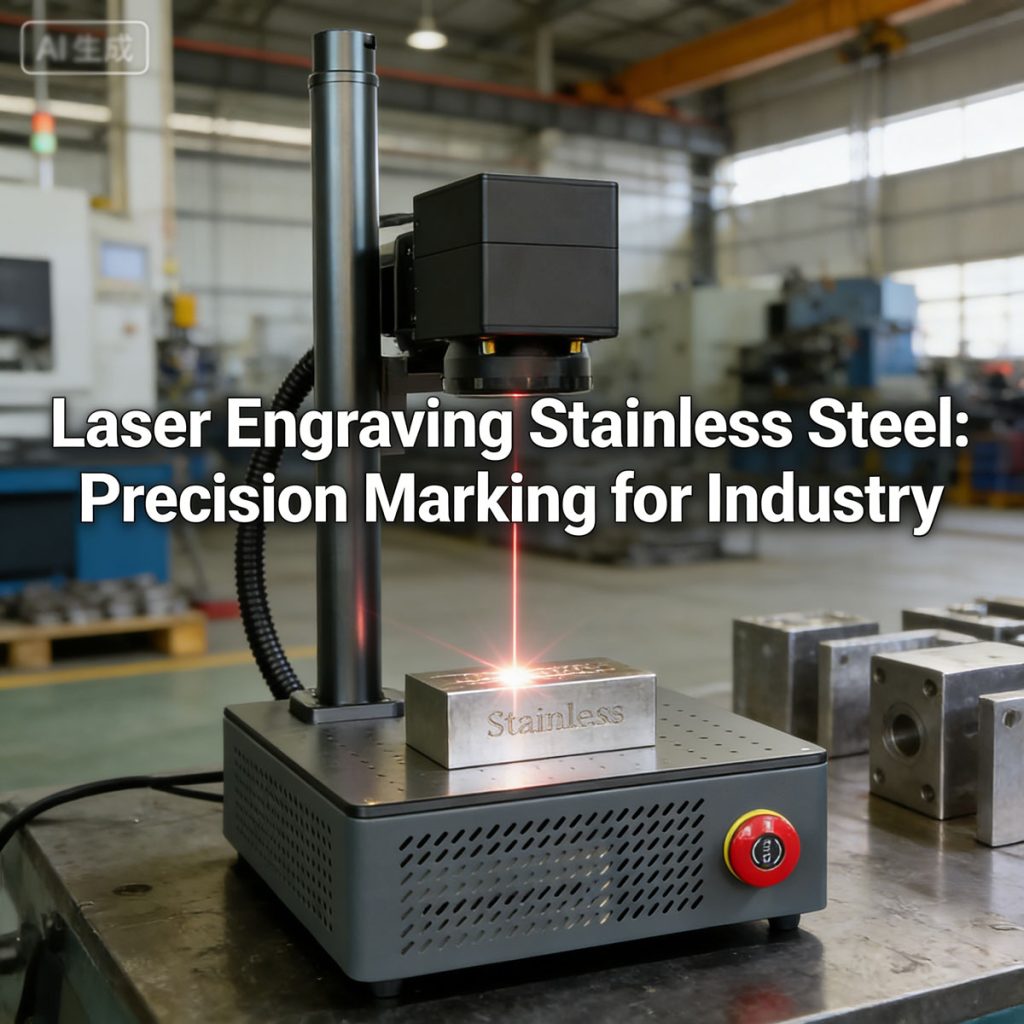
Today, laser engraving technology has emerged as one of the most efficient solutions for marking and customizing stainless steel components. By using concentrated laser energy rather than mechanical tools, manufacturers can create permanent, high-precision marks while preserving the integrity of the metal surface.
Why Stainless Steel Requires Advanced Engraving Methods
Stainless steel contains chromium and nickel alloys that create a protective oxide layer, giving the material its corrosion resistance and hardness. While these characteristics improve durability, they also make conventional engraving methods inefficient. Mechanical engraving can scratch or deform the surface, while chemical etching often involves hazardous chemicals and inconsistent precision.
Laser engraving solves these challenges through non-contact processing. Instead of cutting the material with tools, a focused beam of energy modifies the surface at a microscopic level. The result is extremely precise engraving without physical pressure or mechanical wear.
How Laser Engraving Works on Stainless Steel
In industrial systems, fiber lasers are typically used for stainless steel processing. These lasers operate around a wavelength of about 1064 nm, which metals absorb efficiently. The beam is directed through a scanning system and focused onto a tiny spot on the metal surface.
When the laser hits the steel, the energy converts instantly into heat, producing several possible effects:
-
Oxidation marking: a thin oxide layer forms, producing colors such as black, blue, or gold.
-
Surface etching: shallow material removal for logos or identification codes.
-
Deep engraving: multiple passes remove more material to create textured patterns or deep marks.
This controlled interaction allows engraving precision down to approximately 0.01 mm, enabling extremely detailed graphics and micro-text.
The Hidden Power of Laser Annealing
One of the most fascinating laser techniques used on stainless steel is annealing. Instead of removing metal, the laser gently heats the surface just below its melting point. This encourages chemical changes that create a dark oxide layer on the surface.
The benefits of annealing are significant:
-
the metal surface remains completely smooth
-
corrosion resistance is preserved
-
markings become highly durable and chemically resistant
Because the process does not damage the protective layer of stainless steel, it is especially valuable in medical devices and food-processing equipment, where hygiene and corrosion resistance are critical.
Key Advantages Over Traditional Marking Methods
Laser engraving has rapidly replaced older techniques in many industrial sectors because of its unique advantages.
Permanent and High-Contrast Markings
Laser-engraved identifiers such as barcodes, QR codes, and serial numbers remain readable even after exposure to heat, chemicals, or abrasion.
Non-Contact Precision
Because the laser does not touch the metal surface, it avoids deformation and allows extremely accurate markings on delicate or thin components.
Zero Consumables
Unlike inkjet printing or chemical etching, laser systems require no inks or acids, reducing operating costs and environmental impact.
High Production Speed
Modern fiber laser systems can mark at speeds reaching thousands of millimeters per second, making them suitable for high-volume manufacturing lines.
These advantages explain why laser marking systems are now standard equipment in many automated production facilities.
Industrial Applications Driving Demand
Laser engraving on stainless steel is used across numerous industries that require durable identification or branding.
Automotive Manufacturing
Vehicle components often require traceability codes that must remain readable for the entire life cycle of the part.
Medical Devices
Surgical tools and implants rely on laser-engraved identifiers for regulatory compliance and sterilization tracking.
Food Processing Equipment
Smooth laser markings ensure that engraved surfaces remain hygienic without trapping bacteria.
Consumer Products
Luxury watches, stainless steel jewelry, and premium kitchen tools frequently feature decorative laser-engraved designs.
Across all these industries, permanent marking is critical for quality control, safety compliance, and supply-chain traceability.
A New Perspective: Laser Engraving as Industrial Data Encoding
Laser engraving is often seen as simply a method of decorating metal surfaces. In reality, its role in modern manufacturing is far more strategic.
Every engraved code can act as a digital identity for a product. A small data matrix symbol engraved on a stainless steel component can link that physical object to an entire database containing production records, inspection reports, and supply-chain information.
In this sense, the engraved surface becomes part of the digital infrastructure of modern industry.
Metal is no longer just a material—it becomes a medium for storing information.
Conclusion
Laser engraving has revolutionized the way stainless steel products are marked and customized. By using concentrated laser energy, manufacturers can create precise, permanent markings without damaging the metal or compromising its corrosion resistance.
As manufacturing continues moving toward automation, traceability, and smart factories, laser engraving will play an increasingly important role. The technology does more than create marks—it connects physical products with digital systems that track their entire lifecycle.
In the future, the most valuable engravings on stainless steel may not be decorative patterns or logos—but the data embedded directly into the metal surfaces that power modern industry.
-
-
AuthorPosts
- You must be logged in to reply to this topic.