
Home › Forums › Laser Marking Forum › MOPA Laser Marking Machines: Precision Marking for Modern Industry
Tagged: MOPA Laser Marking Machines
- This topic is empty.
-
AuthorPosts
-
03/13/2026 at 4:57 AM #826
Dwmin
KeymasterMOPA Laser Marking Machines: Precision Marking for Modern Industry
Laser marking technology has evolved dramatically over the past two decades. As industries demand higher precision, more material compatibility, and greater flexibility in marking results, traditional fiber laser systems are no longer sufficient for many advanced applications. One of the most significant innovations addressing these needs is the MOPA laser marking system, a specialized type of fiber laser technology designed to provide exceptional control over laser pulses.
Today, MOPA laser marking machines are widely used in industries such as electronics manufacturing, medical device production, automotive engineering, and precision hardware fabrication. Their ability to produce high-contrast marks, detailed engraving, and even color markings on metal surfaces has positioned them as one of the most versatile marking solutions in modern manufacturing.
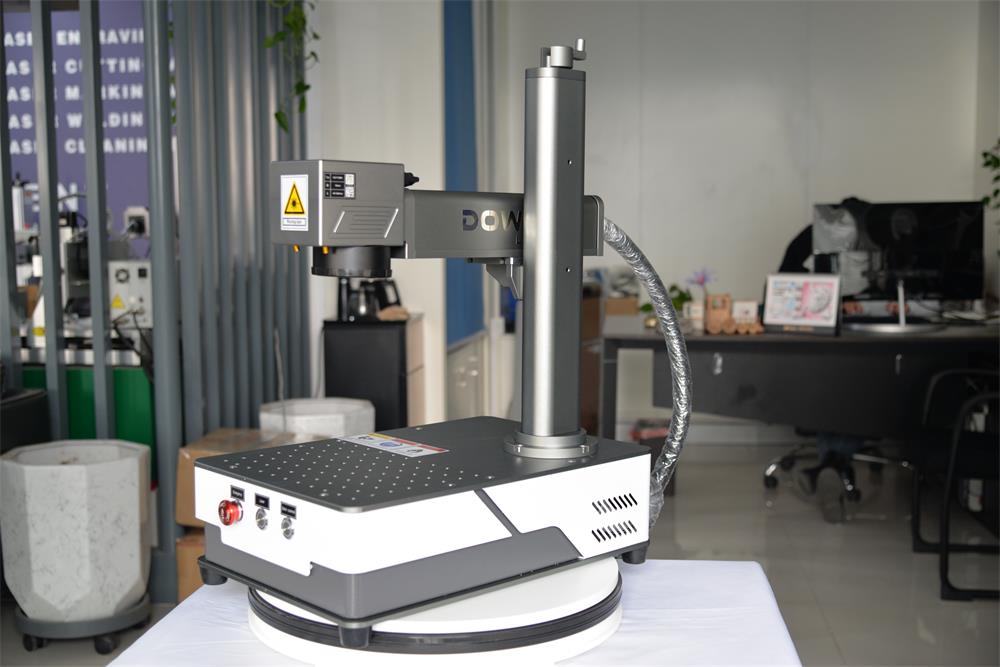
What Is a MOPA Laser?
MOPA stands for Master Oscillator Power Amplifier, a laser architecture that separates the generation of the laser beam from the amplification stage. Instead of relying on a single laser source, this design uses a master oscillator to generate the initial beam and a power amplifier to increase its intensity.
This configuration allows operators to precisely control key parameters such as:
-
pulse width
-
frequency
-
peak power
-
pulse duration
Because of this high level of control, MOPA lasers can adapt to a wide variety of materials and marking requirements that conventional fiber lasers cannot easily achieve.
In practical terms, this means that manufacturers can fine-tune the laser output to create different visual effects—from deep engraving to delicate surface coloration.
How MOPA Laser Marking Machines Work
A typical MOPA laser marking system includes several integrated components that work together to produce precise markings.
First, the laser source generates a beam at a specific wavelength—often around 1064 nm, which is particularly effective for metal processing.
Next, the beam is directed through optical fibers and amplified to achieve the desired power level. The amplified beam then passes through a scanning system that uses high-speed mirrors to guide the laser across the surface of the material.
Finally, specialized software controls the marking pattern, translating digital designs—such as text, barcodes, or logos—into precise laser movements.
Because the scanning mirrors move extremely quickly, the system can mark thousands of characters or patterns in seconds while maintaining micron-level accuracy.
MOPA vs Traditional Fiber Lasers
Although both technologies belong to the fiber laser family, they serve different purposes.
Traditional fiber lasers typically operate with fixed pulse characteristics. While this works well for cutting and welding, it limits flexibility in marking applications.
MOPA lasers, by contrast, provide adjustable pulse parameters, which allow operators to change how the laser interacts with the material.
This difference creates several practical advantages:
Feature MOPA Laser Standard Fiber Laser Pulse control Highly adjustable Limited Material compatibility Wider range More restricted Color marking Possible on metals Rare Plastic marking Better heat control Risk of burning Precision Higher control Standard Because of this flexibility, MOPA systems are particularly effective for delicate materials where thermal damage must be minimized.
Unique Capabilities of MOPA Laser Technology
One of the most impressive features of MOPA lasers is their ability to produce color markings on certain metals, especially stainless steel and titanium. By carefully controlling pulse energy and frequency, the laser alters the oxide layer on the metal surface, producing different colors without using pigments.
This capability is increasingly popular in industries such as consumer electronics and luxury products, where aesthetic design plays an important role.
Another important advantage is improved marking on plastics. Many plastics are sensitive to heat and can easily melt or burn under conventional fiber lasers. MOPA systems allow shorter pulse durations and controlled energy delivery, enabling clean marks without damaging the surrounding material.
These capabilities expand the range of possible applications far beyond simple industrial labeling.
Applications Across Multiple Industries
Because of their precision and flexibility, MOPA laser marking machines are used in a wide variety of industries.
Electronics Manufacturing
Tiny electronic components often require microscopic serial numbers, QR codes, or traceability marks. MOPA lasers can produce extremely fine markings without damaging sensitive circuits.
Medical Device Production
Medical tools and implants must include permanent identification marks that remain readable after sterilization and repeated use.
Automotive Components
Parts such as gears, bearings, and engine components require durable markings that resist heat, friction, and chemical exposure.
Consumer Products
MOPA lasers are frequently used to engrave logos, decorative patterns, and product identification on items like metal accessories and electronic device housings.
Because these marks are permanent and resistant to wear, they remain visible throughout the product’s lifecycle.
Business Opportunities Enabled by MOPA Laser Marking
Beyond large industrial factories, MOPA laser machines also open opportunities for small businesses and custom manufacturing.
Entrepreneurs can use these systems for:
-
personalized jewelry engraving
-
custom metal gifts
-
branded promotional products
-
QR code engraving for smart marketing campaigns
-
decorative metal artwork
Laser marking allows businesses to produce customized items quickly without molds, tooling, or chemical processing.
In the era of mass personalization, this flexibility is extremely valuable.
Choosing the Right MOPA Laser Marking System
Selecting the appropriate machine depends on several factors.
First, power output must match the intended applications. Common industrial configurations range from 20W to 100W, with higher power enabling faster marking and deeper engraving.
Second, the machine must be compatible with the materials used in production. While MOPA lasers work particularly well on metals, they can also mark plastics, coated materials, and certain composites.
Finally, scanning speed, cooling systems, and software compatibility all influence production efficiency and overall reliability.
Careful evaluation of these factors ensures the system meets both current and future production needs.
A Different Way to Think About Laser Marking
Many companies still view laser marking as a simple labeling process—just a way to add serial numbers or logos to products.
But this perspective is outdated.
In modern manufacturing, laser marking is evolving into a data integration technology. Each mark can encode information such as production history, supply chain tracking data, or authentication identifiers.
With the rise of smart factories and digital manufacturing systems, the tiny marks produced by a MOPA laser can connect physical products to massive digital databases.
In this sense, laser marking is no longer just a finishing step.
It is becoming a bridge between physical manufacturing and digital information systems.
Conclusion
MOPA laser marking machines represent one of the most advanced developments in laser processing technology. By enabling precise control over pulse characteristics, they offer greater flexibility, higher marking quality, and expanded material compatibility compared with conventional fiber lasers.
Their ability to produce color marks, delicate engravings, and high-contrast industrial codes makes them valuable across industries ranging from electronics and medical manufacturing to personalized consumer products.
As manufacturing continues to move toward automation, traceability, and customization, MOPA laser systems are likely to play an increasingly important role in shaping the future of industrial marking.
-
-
AuthorPosts
- You must be logged in to reply to this topic.